
Garlic Mustard
Description
Garlic mustard (Alliaria petiolata) is an invasive biennial plant native to Europe that was introduced to North America in the 1800s as an edible herb and medicinal plant. It can form dense populations in forests and other natural areas, where it crowds out native vegetation, including species at risk. Garlic mustard can also release chemicals that interfere with the growth of nearby plants and beneficial soil fungi, altering forest ecosystems. A single plant can produce thousands of seeds, allowing infestations to spread and persist for many years.
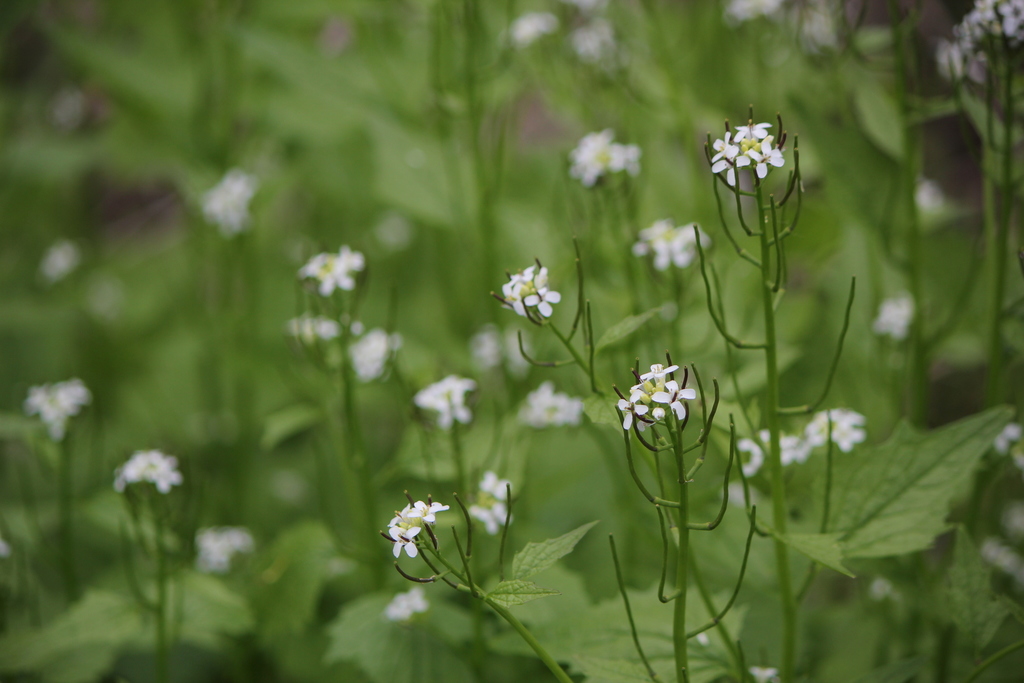
© Quinten Wiegersma via iNaturalist.org, used under CC-BY
Introduction and Spread
Garlic mustard is native to Europe and was introduced to North America in the early 1800s as an edible herb and medicinal plant. It was first recorded in the US in 1868 and in Canada in 1897. It spreads exclusively via seeds and dense stands can produce more than 60, 000 seeds per square meter. They are typically spread long distances by animals and humans as most seeds fall close to the parent plant. For example, garlic mustard seeds may stick to the bottom of hiking boots and be spread down trails.
Habitat
Garlic mustard can grow in a wide variety of habitats. It is commonly found in disturbed areas such as along roadsides, trails, fence lines and forest edges. From here, it can spread into areas of high ecological value such as old growth forests. It can tolerate many soil types in addition to light regimes, but is most often found in damp, calcareous-based (limestone) soils in partial shade.
Identification
Note: Garlic mustard has a biennial life cycle which occurs over two years. First and second year plants have different ID characteristics.
First-year plants
Second-year plants
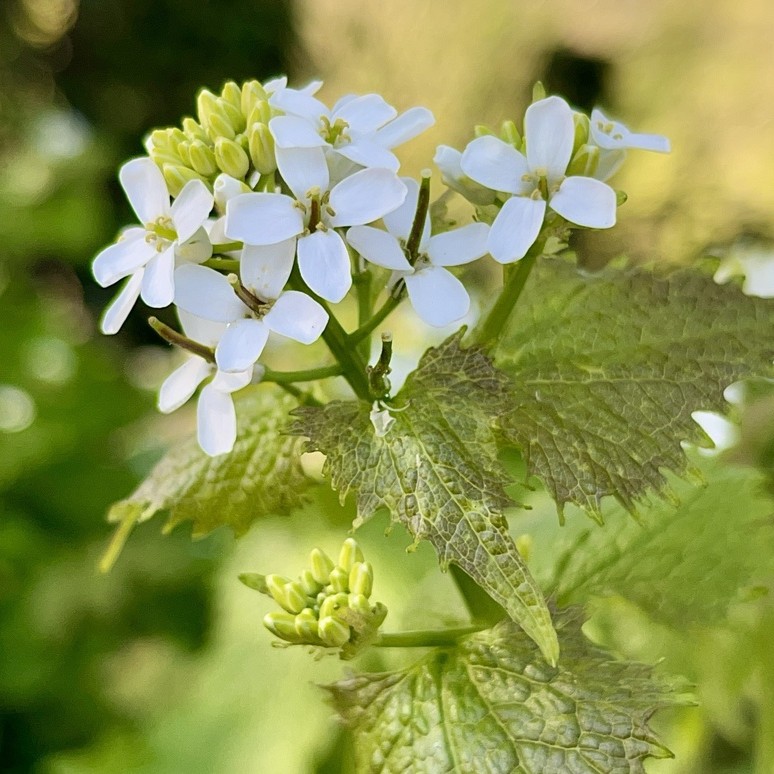
Second-year flower
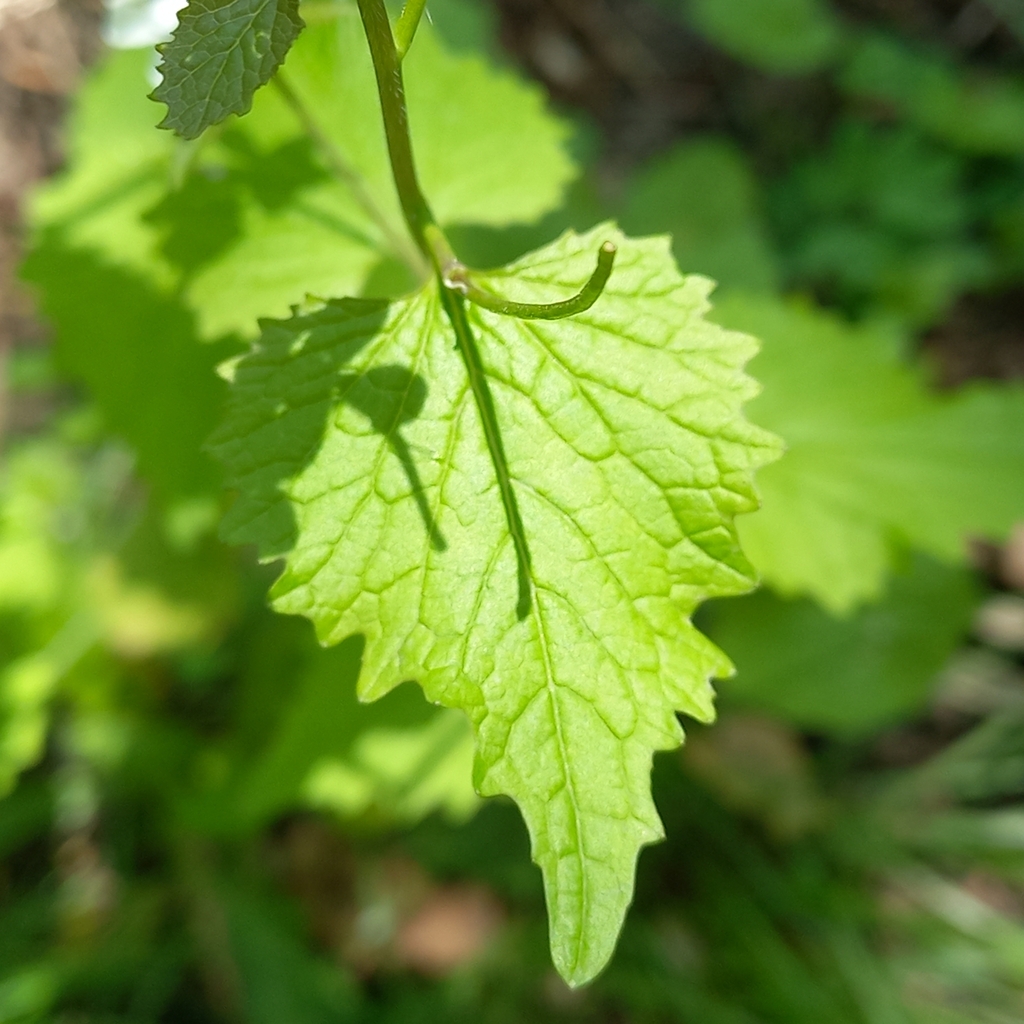
Second-year leaf
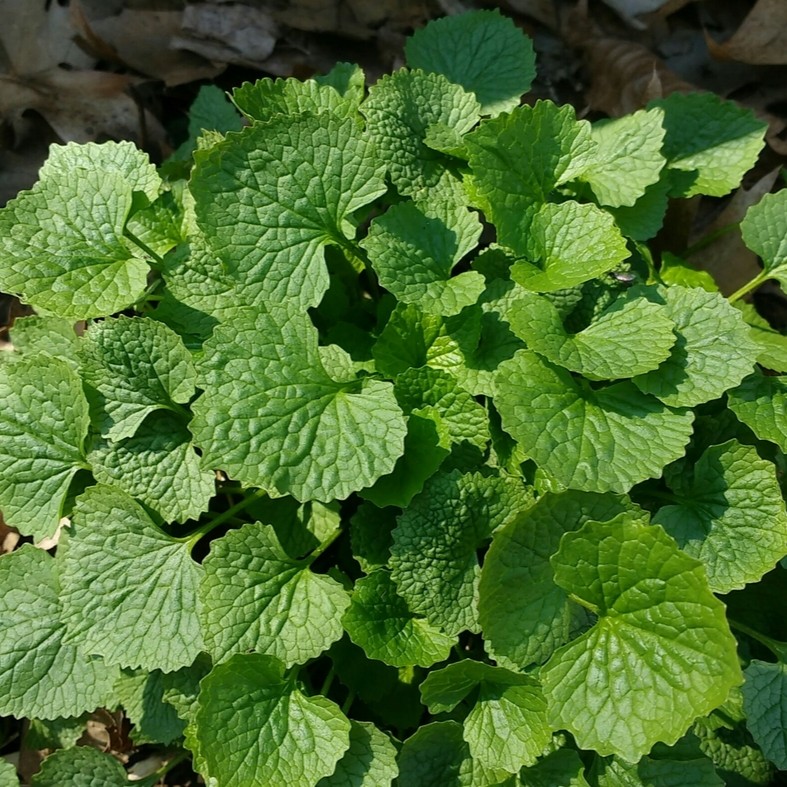
First-year plant
Impacts
Life cycle
Garlic mustard begins to grow early in the spring and its leaves will often be green under the snow. This gives it a competitive advantage because it is able to start growing earlier than many native species. Garlic mustard has a biennial life cycle that occurs over two years. In its first year, the plant grows low to the ground in a circular structure of leaves called a basal rosette and does not flowers. In its second year, it will produce an erect stem and flower in the spring into the summer (April to June). Flowers produce seed pods (siliques) are produced in summer (late June) and continues into the fall. Once a garlic mustard plant flowers, it dies and a new plant germinates from seed. One plant can produce up to 8000 seeds. Plants can resprout from the root crown or can produce multiple flower heads after being cut (Cavers et al. 1979).
What You Can Do
You can help prevent the spread of garlic mustard by:
Other Resources
- Burke DJ. 2008. Effects of Alliaria petiolata (Garlic Mustard; Brassicaceae) on mycorrhizal colonization and community structure in three herbaceous plants in a mixed deciduous forest. American Journal of Botany 95(11): 1416-1425.
- Cavers PB, Heagy MI, Kokron RF. 1979. The Biology of Canadian Weeds. 35. Alliaria petiolata (M. Bieb.) Cavara and Grande. Canadian Journal of Plant Science 59: 217-22.
- McCarthy BC and Hanson SL. 1998. An assessment of the allelopathic potential of the invasive weed Alliaria petiolata (Brassicaceae). Castanea 63(1): 68-73.
- Meekins JF and McCarthy BC. 1999. Competitive ability of Alliaria petiolata (Garlic Mustard, Brassicaceae), an invasive, nonindigenous forest herb. International Journal of Plant Science 160(4): 743- 752.
- Nuzzo V. 1999. Invasion Pattern of the herb garlic mustard (Alliaria petiolata) in high quality forests. Biological Invasions 1: 169-179.
- Rodgers VL, Wolfe BE, Werden LK, Finzi AC. 2008. The invasive species Alliaria petiolata (garlic mustard) increases soil nutrient availability in northern hardwood-conifer forests. Oecologia 157: 459-471.