
A Tale of Two Hemlocks
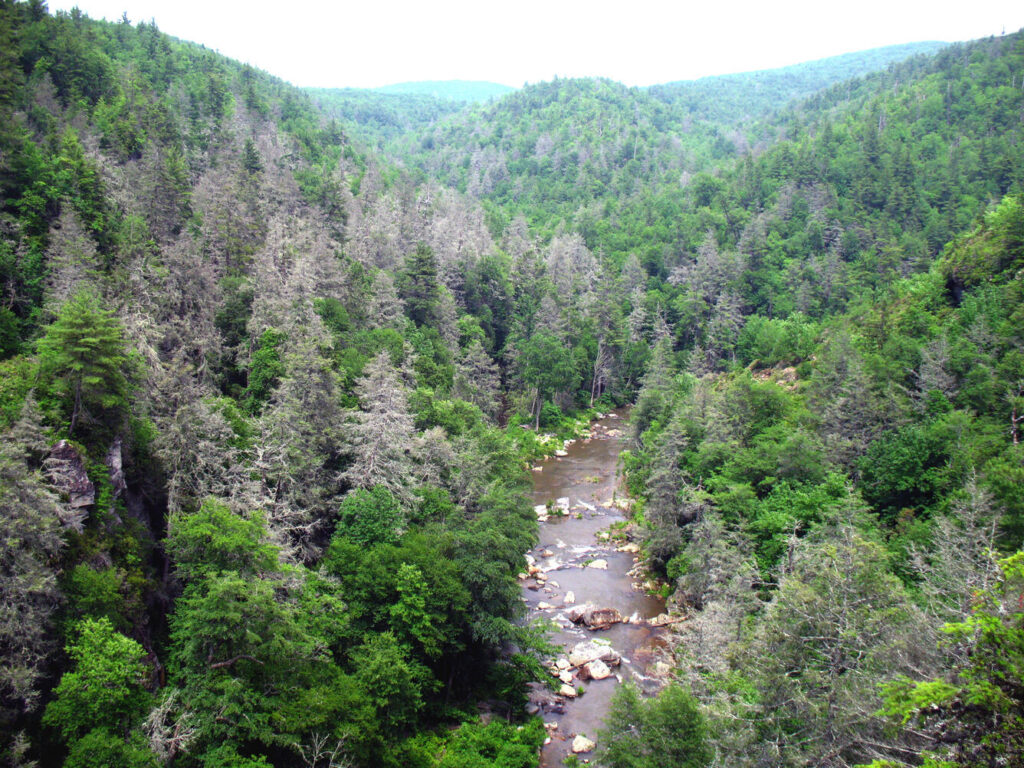
Hemlock woolly adelgid turned hemlock trees into characteristic “gray ghosts” in North Carolina’s Linville Gorge Wilderness, part of the Appalachian Mountains (USGS)
This Tree Check Month, Invasives Canada and organizations across the country are encouraging Canadians to inspect their trees for signs of disease and invasive forest pests. Invasive insects like emerald ash borer, spongy moth, spotted lanternfly, and hemlock woolly adelgid have damaged forests across North America.
But surprisingly, an insect that’s considered invasive in one part of Canada may be completely naturalized in another, and vice versa. If you’re in British Columbia for example, hemlock woolly adelgid is considered a natural part of the forest ecosystem and not a cause for concern. However, in other parts of the country any sighting of the hemlock woolly adelgid should be immediately reported to Canadian Food Inspection Agency.
Now what makes the same insect, in this case a tiny aphid-like insect, harmless on one side of the country, yet capable of destroying forests on the other?
Although both populations belong to the same species, their arrival in North America is separated by millennia. Their unique histories on this continent have shaped vastly different relationships with eastern and western hemlock forests.
One Species. Two Histories.
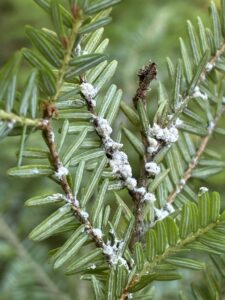
Image of hemlock woolly adelgid (iNaturalist, ©Jamie VanBuskirk CC-BY)
Scientists estimate that hemlock woolly adelgid (HWA) first arrived in western North America during the late Pleistocene – some tens of thousands of years ago. At the time, Asia and North America were connected by the Bering Land Bridge, and it’s suggested that this is how HWA migrated, perhaps carried by birds. This happened so long ago that today, HWA found in British Columbia are genetically distinct from the populations found in Asia and the invasive population in eastern North America.
Just as the insect evolved over time, so did the forest around it. Western hemlock have developed natural resistances against the insect and a community of native predators, like the beetle Laricobius nigrinus, keep their population down. Because of time and evolutionary history, HWA is considered a natural part of western forest ecosystems.
The threat to eastern hemlock
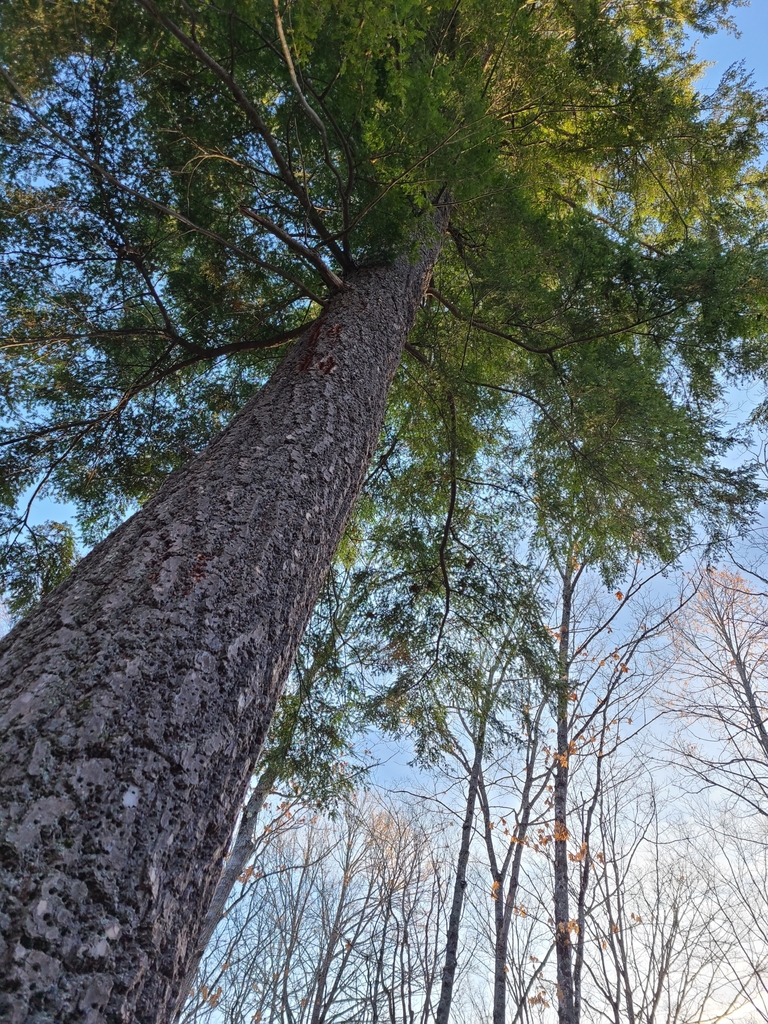
Image of eastern hemlock tree (iNaturalist, ©errantlight CC-BY-NC)
On the other side of the continent, the story is very different.
Because eastern hemlock haven’t evolved alongside HWA, they lack natural defenses to the insect and tree mortality is extremely high. Combined with the absence of an established community of natural predators, hemlock woolly adelgid populations can grow unchecked.
The combination can be devastating. Since its introduction to the US in the early 1950s, HWA has spread across more than half the native range of eastern hemlock in the country. And in some unmanaged forests in the eastern United States, experts have seen 85% of hemlocks die within only a handful of years after infestation.
In Canada, we’re still in the early stages of invasion. But HWA has the potential to spread across the entirety of Canada’s eastern hemlock’s range. The loss of eastern hemlock as a result would be devastating and extend far beyond the trees themselves.
Protecting our forests
Hemlock is a foundational species that supports and provides habitat for all types of wildlife. Losing these forests would have far reaching and lasting environmental, economic, and cultural consequences for generations to come.
Thankfully, there are steps Canadians can take to slow the spread of hemlock woolly adelgid and buy experts valuable time to develop long-term management strategies.
Don’t Move Firewood!
Although hemlock woolly adelgid can spread naturally, it’s very slow. Movement of firewood is a major pathway through which the insect can cover long distances. Following Buy Local Burn Local practices and not moving firewood can help protect forests from invasion by hemlock woolly adelgid.
Take Part in Tree Check Month!
Early detection gives land managers the best chance to contain and remove a new invasive forest pest, before they get out of control. Because they can’t be everywhere, experts rely on the public to report invasive species so they know where to act.
This Tree Check Month, you can help by learning the signs of invasive forest pests, inspecting your trees, and reporting anything suspicious!
Visit the Canadian Food Inspection Agency’s Tree Check Month site for details on actions you can take and local events near you.