PlayCleanGo® Awareness Week – June 6-13, 2026
Webinar Recordings Available Now on YouTube!
- Behaviour Change Training: Supporting PlayCleanGo Outreach and Action
- Saving the Sagebrush Sea: Protecting Washington’s Sagebrush Biome from Noxious Weeds
- What’s on Your Boots? Seeds, Invasive Species, and Landscape‑Level Patterns from Boot Brush Stations at Elk Island National Park
- Communicating strategies for the prevention of IAS in two countries in Latin America
We PLAYCLEANGO. We Protect the Places We Love.
Invasives Canada, NAISMA and CONABIO invite you to join us for PlayCleanGo® Awareness Week 2026, taking place from June 6–13 across North America. Outdoor enthusiasts, land managers, and recreation partners across Canada, the United States, and Mexico take part in this annual campaign, which empowers everyone who enjoys the outdoors to take simple, effective actions to prevent the spread of invasive species and protect the places we love!
How to Get Involved in 2026:
-
Join Us: Participate from June 6–13, 2026, by promoting PlayCleanGo® actions over social media and at in-person events.
- Learn: Register for one of our PlayCleanGo Webinars!
- Spread the Word: Download and use the Outreach Toolkit to access ready to use graphics, messaging, videos, and outreach resources.
-
Photo Contest: Submit photos to the PlayCleanGo® Photo Contest and show how you protect the places you love
-
Stay Engaged Online: Use hashtags #PlayCleanGoWeek and #PlayCleanGo, and tag @InvasivesCanada on your favourite platforms to join the conversation.
- Stay Tuned!
Outreach Toolkit
The PlayCleanGo® Awareness Week Action Toolkit is now available and includes ready to use resources to help partners, organizations, and individuals participate in the campaign.
The toolkit includes:
- Toolkit guide and resource overview
- Social media graphics and sample captions
- Outreach and messaging templates
- Press release and proclamation templates
- PlayCleanGo® logos and campaign materials
- Multilingual outreach resources
- Links to webinars, events, videos, and partner resources
Webinar Series
This FREE webinar series is being presented as part of PlayCleanGo Awareness Week, a collaborative initiative led in partnership with NAISMA, Invasives Canada, CONABIO, and partners across North America to help prevent the spread of invasive species.
Behaviour Change Training: Supporting PlayCleanGo Outreach and Action
Wednesday, June 3 @ 3:00pm ET
In preparation for PlayCleanGo Week (June 6–13), Invasives Canada, in partnership with the North American Invasive Species Management Association (NAISMA), is hosting a behaviour change training webinar to help partners strengthen their outreach and engagement efforts through the PlayCleanGo program.
Creating awareness is an important first step, but lasting conservation impact requires motivating people to take action. This webinar will explore behavioural psychology, community-based social marketing strategies, and practical approaches for encouraging stewardship behaviours that help prevent the spread of invasive species. Participants will also learn how these concepts are being applied through the PlayCleanGo program, with insights and tools that can be adapted to a wide range of conservation and outreach initiatives.
Ken Donnelly, Executive Director, Invasives Canada
For more than thirty years, Ken Donnelly has combined research and behavioural psychology to foster positive individual behaviours in environmental conservation. For more than 12 years, his focus has been primarily on the human dimension of invasive species. Ken is a researcher, strategist, trainer, and speaker.
Saving the Sagebrush Sea: Protecting Washington’s Sagebrush Biome from Noxious Weeds
Monday, June 8 @2:00pm ET
How one idea to protect the fragile shrub-steppe ecosystem from noxious weeds led to a multi-jurisdictional collaboration statewide. Come learn how the Washington Invasive Species Council built numerous partnerships focused on noxious weed prevention. Working closely with the PlayCleanGo campaign, these efforts led to the installation of more than 50 educational boot brush stations in Washington.
Jan Fore, Washington Invasive Species Council
Jan is the Executive Coordinator for the Washington Invasive Species Council. She previously served as a public affairs role working with the National Wildlife Refuge System for the U.S. Fish and Wildlife Service. Jan also brings invasive species experience from the opposite corner of the US, where, she worked at the Florida Fish and Wildlife Conservation Commission, coordinating with multiple agencies, the public, and stakeholders to provide invasive species outreach and education. She managed statewide programs including the Exotic Pet Amnesty Program, Python Patrol, and the Florida Python Challenge.
What’s on Your Boots? Seeds, Invasive Species, and Landscape‑Level Patterns from Boot Brush Stations at Elk Island National Park
Wednesday, June 10 @2:00pm ET
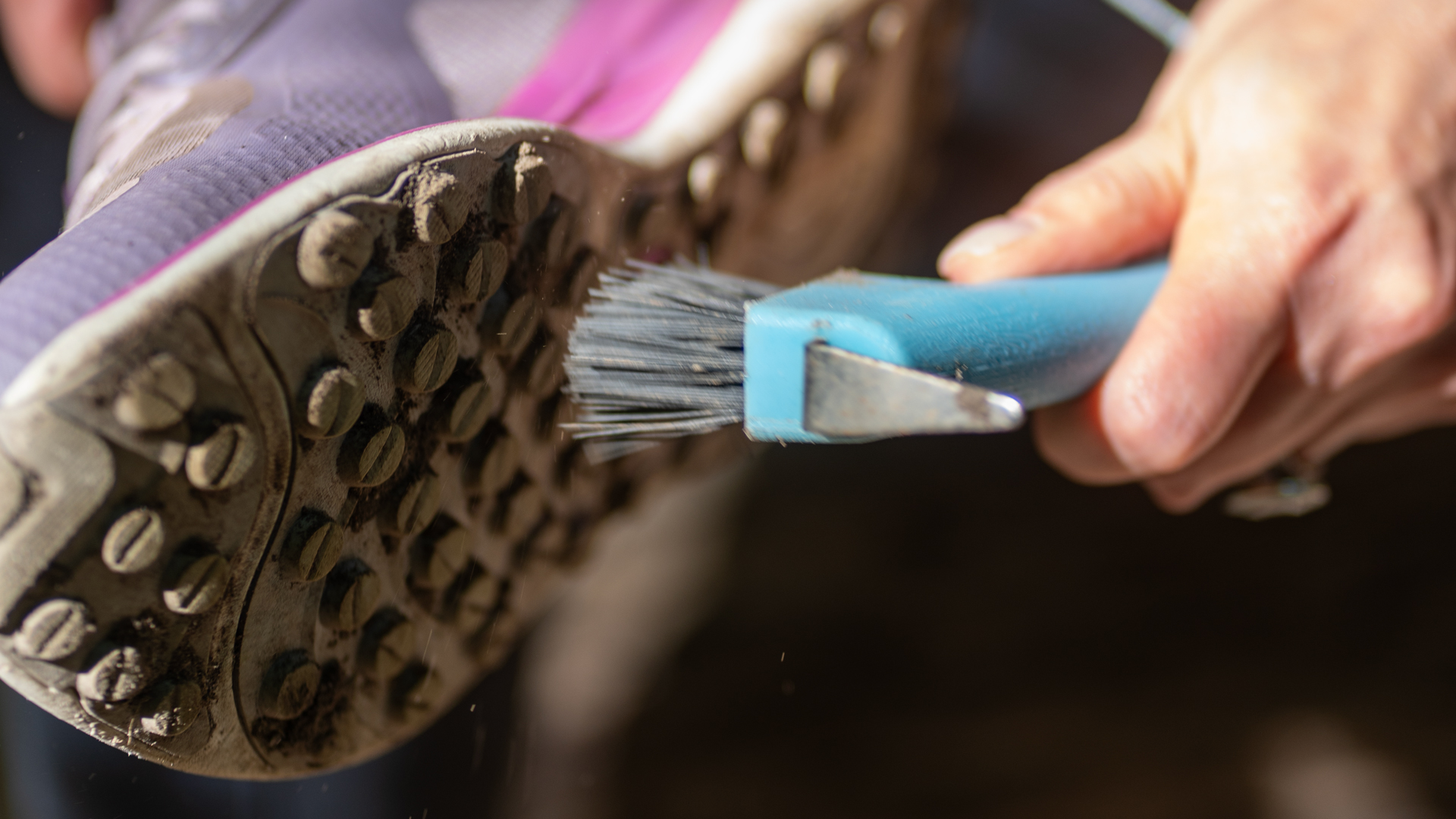
Seed dispersal is a natural process that helps keep ecosystems healthy and resilient. However, when people visit parks, they can unknowingly carry seeds on their boots—including seeds from invasive plants—which can change what grows where. Programs like PlayCleanGo help reduce this risk by encouraging visitors to clean their gear and by providing opportunities to educate visitors and monitor seed movement. In this talk, we’ll share results from a pilot study using PlayCleanGo boot brush stations at Elk Island National Park. We found that visitors can carry up to 4,000 viable seeds in just one litre of soil, with more than 30,000 viable seeds collected at boot brush stations over a single summer. In total, 57 plant species were identified—about half of which were only found through visitor dispersal—and more than 50% were non-native. Notably, visitor-dispersed seeds were consistent across trailheads and independent of visitor volume, highlighting that visitor activity can actively homogenize the landscape and drive significant ecological change.
Charlotte Brown, Ecologist Team Lead, Parks Canada
Charlotte Brown is an Ecologist Team Lead at Parks Canada, based at Elk Island National Park and an Adjunct Professor in the Biological Sciences Department at the University of Alberta. Her work focuses on invasive plant management, bison management, ecological monitoring, and supporting evidence-based decision-making to maintain ecosystem health. Charlotte completed her Ph.D. in Ecology at the University of Alberta, where her research examined species interactions and the processes shaping native grassland communities. She has since held postdoctoral fellowships at the University of Arizona and Université de Sherbrooke, where she studied long-term vegetation change and responses to global change. Her current work bridges science and management, applying ecological research to real-world conservation challenges in Canada’s protected areas.
Communicating strategies for the prevention of IAS in two countries in Latin America
Friday, June 12 @3:00pm ET
*This Webinar will be presented in Spanish, English subtitles will be available*
Invasive species are one of the main drivers of biodiversity loss worldwide and different countries have taken different approaches to communicating this to society taking into account culture, language, and local traditions. Let’s hear about two countries in Latin America, Mexico, part of NAISMA, and Chile, on the other side of the continent and learn about the differences and similarities in tackling this common problem.
This webinar is being presented as part of PlayCleanGo Awareness Week, a collaborative initiative led in partnership with NAISMA, Invasives Canada, CONABIO, and partners across North America to help prevent the spread of invasive species. To learn more, visit PlayCleanGo.org.
Yolanda Barrios, National Commission for the Knowledge and Use of Biodiversity (CONABIO)
Yolanda Barrios is the head of the department of invasive species at the National Commission for the Knowledge and Use of Biodiversity (CONABIO) in Mexico where she has worked for almost 20 years. She brings together her knowledge on invasive species and studies in science communication in workshops and talks for the general public and other stakeholders in different sectors
Sergio Benavides Avendaño, Naturaleza Intrusa
Sergio Benavides Avendaño is a natural resource conservation engineer with a master’s degree in biodiversity, protected areas, and biological invasions. He is the co-founder of Naturaleza Intrusa (Intrusive Nature), a science outreach initiative focused on biological invasions, which has organized the Week on Biological Invasions in Chile since 2019. Since 2023, he has worked in the invasive alien species management program at the Ministry of the Environment.
Learn more about PlayCleanGo® Awareness Week at playcleango.org