
Goutweed
Description
Goutweed (Aegopodium podagraria) is an invasive perennial plant native to Europe and northern Asia that was introduced to North America in the mid-1800s as an ornamental plant. Popular as a low-maintenance groundcover, goutweed spreads rapidly through an extensive network of underground stems called rhizomes and can regrow from small rhizome fragments. Once established, it can form dense patches that crowd out native vegetation and dominate the understory of forests and other natural areas.
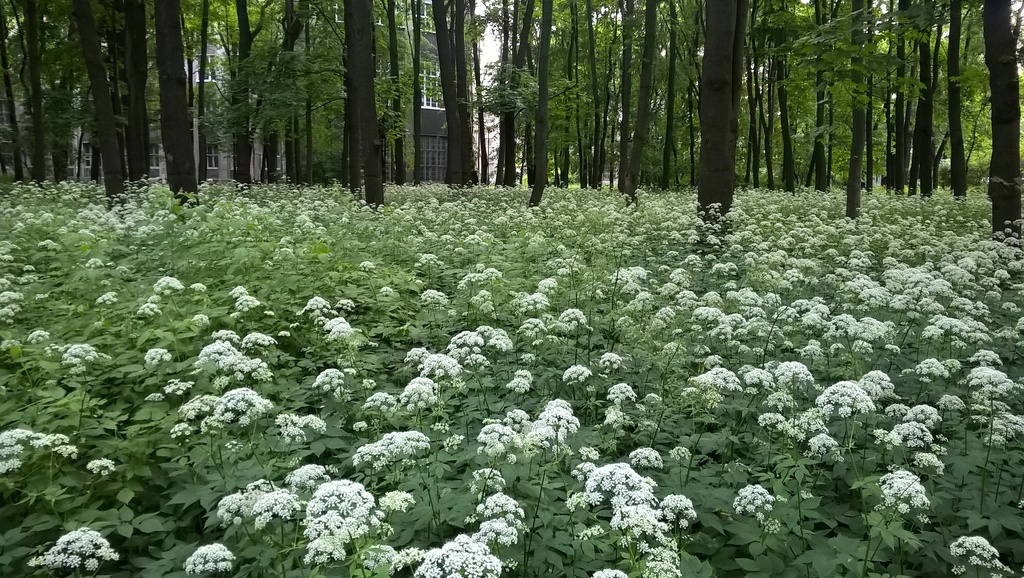
© E_Verbitsky via iNaturalist.org, used under CC-BY-NC
Introduction and Spread
Goutweed is native to Europe and northern Asia. It was introduced to North America in the mid-1800s as an ornamental plant. It was first recorded in Canada in 1902. It continues to be a widely popular ornamental plant due its adaptability, versatility, low maintenance requirements, drought tolerance and its ability to spread rapidly. Humans are the primary pathway of spread for goutweed as most infestations originate from the intentional planting of this species. Dumping yard waste into natural areas, which is typically illegal, is another way that goutweed is introduced to natural areas. Goutweed can regenerate from a small rhizome fragment.
Goutweed occurs in at least 29 US States Maine south to Georgia, west to Minnesota and Missouri, as well as in the Pacific northwest in Montana, Idaho, Oregon, and Washington. The importation and sale of goutweed is prohibited in Connecticut, Maine, Massachusetts and Vermont. Goutweed has spread across most of Canada with the exception of Newfoundland and Labrador, Yukon, Nunavut, and the Northwest Territories.
Habitat
Goutweed can be found in a variety of habitats. However, it prefers partial sun to full shade and well-drained soils. It typically established in the understory of forests where the ground layer has been recently disturbed or the soil is bare (Lind 2011). Goutweed can be found in a variety of disturbed environments such as abandoned fields, meadows, pastures, forest edges, roadsides and ditches. In North America, it can be found in upland hardwood forests, riparian areas, forest borders, floodplains, wetlands and along the edges of bogs (Waggy 2010).
Identification
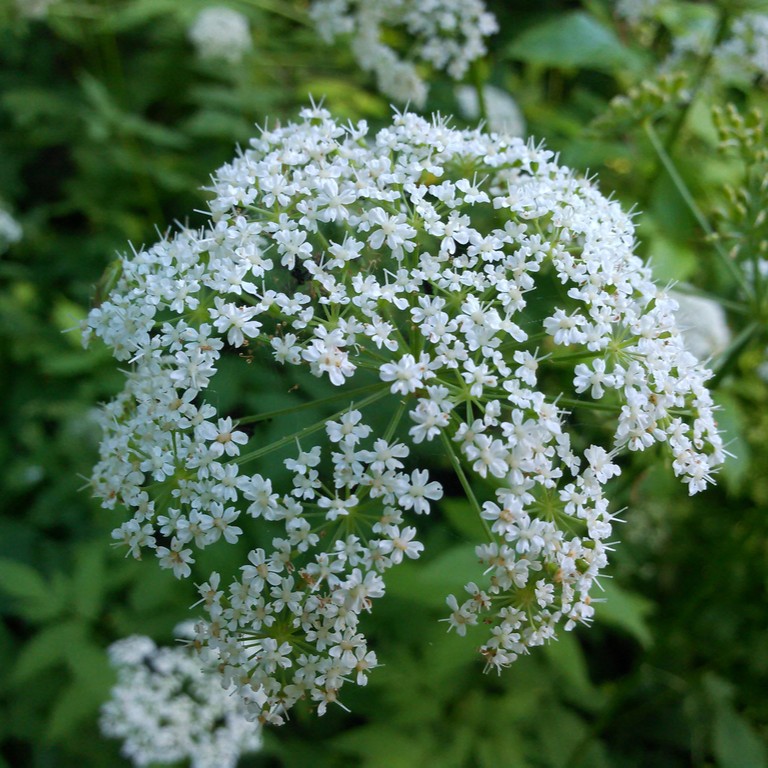
Goutweed flower
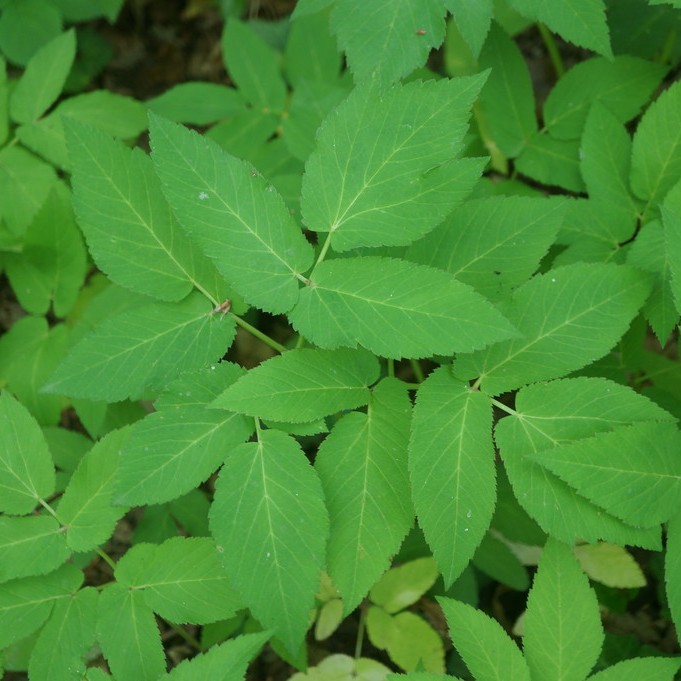
Goutweed leaves
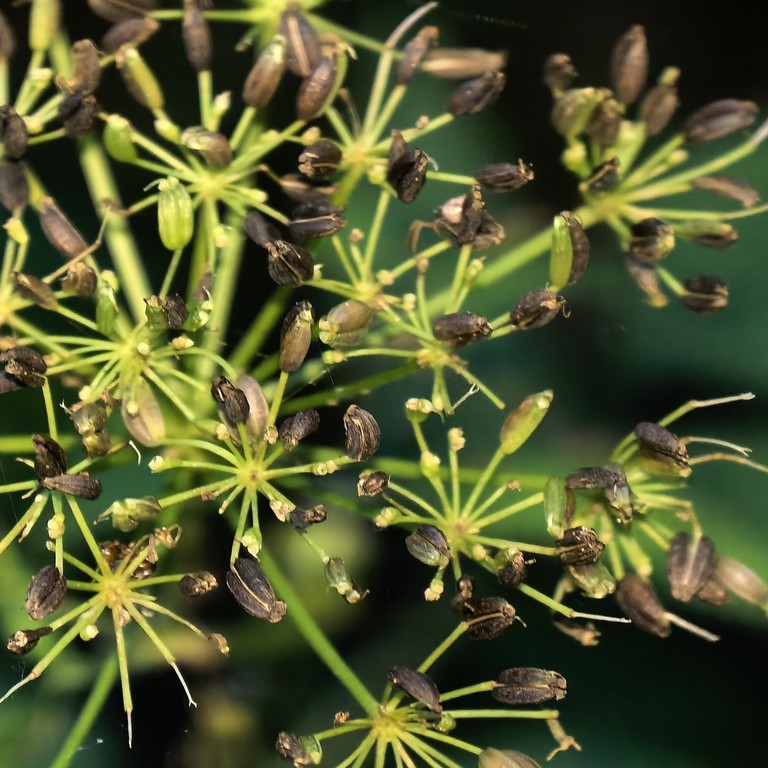
Goutweed seeds
Impacts
Life cycle
Goutweed predominantly spreads via rhizomes. Its leaves begin to develop in the early spring and are usually fully expanded by May. They tend to stay green into the fall and until the first frost. In early spring, the leaves are often green below the snow. Its flowers bloom from June to August and the fruits ripen from mid-July to September. Goutweed can also spread via seeds which require a long period of cold stratification to germinate. However, goutweed does not form long-lived seed banks (Lind 2011). Its rhizome network can spread up to 70 cm per year away from the parent plant. The plant consumes all its carbohydrate reserves in the spring (Meyer and Hellwig 1997).
What You Can Do
You can help prevent the spread of goutweed by:
Other Resources
- Lind S. 2011. Aegopodium podagraria L. Available from: https://dnr.wisconsin.gov/topic/Invasives/fact/BishopsGoutweed [Accessed 2025 August 11].
- Meyer K, Hellwig FH. 1997. Annual cycle of starch content in rhizomes of the forest geophytes Anemone nemorosa and Aegopodium podagraria. Flora. 192(4): 335-339.
- Waggy MA. 2010. Aegopodium podagraria. In: Fire Effects Information System [online]. US Department of Agriculture, Forest Service, Rocky Mountain Research Station, Fire Sciences Laboratory. Available from: https://www.fs.usda.gov/database/feis/plants/forb/aegpod/all.html [Accessed 2025 August 11].
- Schimpf DJ, Garske SC, Regal RR. Persistent Effects of Herbaceous Species on the Infectious Lethality of Soil for Conifer Seedlings. University of Minnesota, Duluth, MN. Available from: https://conservancy.umn.edu/bitstreams/5a9073f8-a4e9-4f4e-917c-f83f7391cd3c/download [Accessed 2025 August 11].