
Emerald Ash Borer

Description

The emerald ash borer (EAB) is a small beetle with a bright metallic green shell, native to East Asia. EAB is an invasive species in North America, notorious for causing significant damage to ash trees having already killed millions of trees in North America. The beetle targets all species of ash trees, burrowing into their bark to lay eggs. The emerging larvae then eat through the tissues of the trees, disrupting the flow of nutrients and water, ultimately leading to the tree’s death.
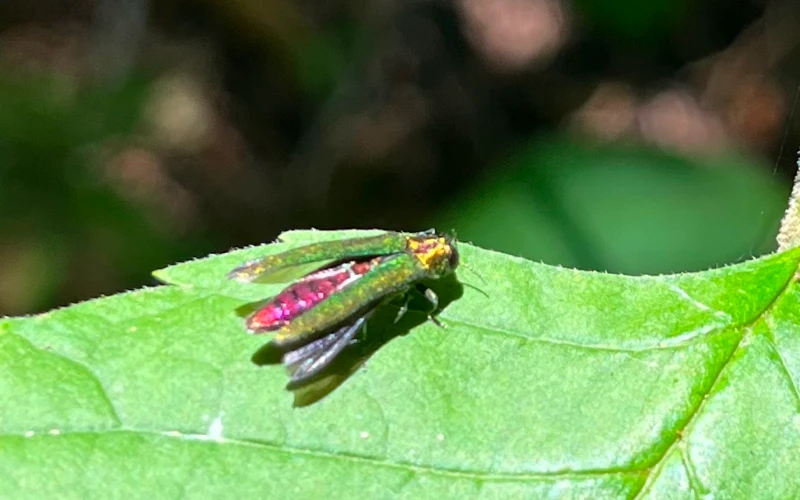
  • Scientific name: Agrilus planipennis

  • Common name(s): Emerald Ash Borer

  • French name: Agrile du frêne

  • Regulatory status: The emerald ash borer is regulated under Canada’s Plant Protection Act. Efforts include stringent monitoring and control measures to prevent further spread, especially the movement of potentially infested ash wood products and firewood.

Emerald Ash Borer on a leaf

© jnaffy via iNaturalist.org, used under CC BY NC

Introduction and Spread

Emerald ash borer (EAB) was first identified in North America in 2002, in Michigan and Ontario. It is believed to have arrived via wooden packing material used in cargo ships or airplanes. EAB has since spread to numerous provinces and states, facilitated by the movement of infested wood products and natural dispersal of the beetle.

Distribution

EAB is present in numerous regions across North America. In Canada, established populations have been found in Ontario, Quebec, Manitoba, Nova Scotia, and New Brunswick. Monitoring and regulatory efforts continue to track and manage its spread to prevent further infestation. Most recently, the beetle has been spotted and identified in British Columbia.

Habitat

Emerald ash borers primarily inhabit ash trees in both urban and rural settings. They are found in forested areas rich in ash species and urban environments where ash trees are commonly planted as street or park trees.

Identification

  • Larvae: Creamy white and flattened, with distinct bell-shaped segments, measuring 1 to 1.4 cm in length. They create serpentine galleries beneath the bark that disrupt the tree’s ability to transport nutrients.

  • Adults: Bright metallic green and approximately 8.5 to 14 mm in length. The adults emerge in late spring and early summer, feeding on ash foliage before mating and laying eggs in the crevices of ash tree bark.

Impacts

Goldfish can significantly impact local ecosystems through:

  • Ecological: The loss of ash trees leads to decreased biodiversity, altered forest composition, and reduced habitat quality for wildlife that depend on ash trees.

  • Economic: The economic impact includes the cost of tree removal, treatment, and replacement in urban areas, which can run into millions of dollars for larger cities. Additionally, the forestry industry suffers from the loss of valuable timber.

  • Social: The depletion of ash trees results in reduced carbon sequestration, increased urban heat islands, and diminished air quality, affecting community health and well-being.

  • Cultural: Black ash is a culturally significant species used for basket weaving in many Indigenous cultures including the Anishiinabe, Haudenosaunee, and Wabanaki peoples. EAB threatens traditional ecological knowledge exchange between generations.

What You Can Do:

You can prevent the spread of Emerald Ash Borer by:

  • not moving firewood

  • If your ash trees have died, replant them with recommended alternatives to ash trees
  • Remember to Buy Local Burn Local to protect natural habitats and biodiversity by stopping the spread of invasive species.

Report any potential sightings of EAB to your local invasive species council, CFIA or through the INaturalist website.

1. Herms, Daniel A., and Deborah G. McCullough. “Emerald ash borer invasion of North America: history, biology, ecology, impacts, and management.” Annual review of entomology 59 (2014): 13-30.
2. MacFarlane, David W., and Shawna Patterson Meyer. “Characteristics and distribution of potential ash tree hosts for emerald ash borer.” Forest Ecology and Management 213.1-3 (2005): 15-24.

Invasive Species Categories

Stop The Spread: Report Invasive Species

How to Prevent and Manage Invasive Species

The Impact of Invasive Species on Canada’s Ecosystems and Economy

Invasive Species Resources: Guides, Manuals, and Best Practices