
Invasive Species Awareness Week (ISAW)

FIND OUR WINTER WEBINAR SERIES BELOW!
Invasive Species Awareness Week 2026:
February 23 – March 1
Invasive species awareness week is a week-long, international initiative dedicated to raising awareness around invasive species. Throughout the week, communities and organizations help spread the word by sharing information on:
- How invasive species are introduced and spread
- The impacts they can have on native species and habitats
- Simple actions everyone can take to reduce their spread
In Canada, ISAW is led by the Invasive Species Centre. Groups and individuals can participate in this awareness week by sharing information on social media and using the hashtag #InvSpWk. Access Invasive Species Centre’s Toolkit and pre-made socials HERE>>
Winter Webinar Series 2026
Each year, beginning during ISAW, Invasives Canada hosts a national Winter Webinar Series featuring practitioners, researchers, and partners working on invasive species prevention and management across Canada. These webinars highlight emerging issues, on-the-ground invasive species work, share latest research on invasive species, and promote actions that can reduce the spread and impacts of invasive species.
This year, Winter Webinar Series Presentations include:
- Youth Eco Stewards – highlighting youth in action!
- Monday, February 23rd
- Implications of extreme flooding events for dispersal of Reynoutria spp. (knotweeds) in the wake of climate change.
- Tuesday, February 24th
- A Horizon Scan watchlist of freshwater & marine non-indigenous species in the maritime provinces of Canada.
- Thursday, March 5th
- Indigenous Guardians: Indigenous leadership in stewardship
- Wednesday, March 18th
- Spotted lanternfly: biology, cold tolerance & leveraging alternative sources of species occurrences for biodiversity and conservation research
- Tuesday, March 24th
Webinar Details and Links Below!
Stay tuned as we announce new topics and details about speakers and presentations.
[Catch up on our past Winter Webinar recordings on our Event Recordings Page]

Youth Eco Stewards – Highlighting Youth in Action!
Monday, February 23th @12:00pm EST
Meet the Speaker: Amanda MacCarthy, Youth Coordinator – Ontario, Youth Eco Stewards
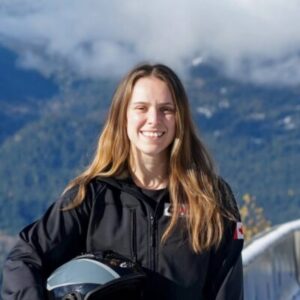
Born in Ottawa, with a background in aquatic ecosystem management and monitoring, Amanda is excited to turn her focus to supporting youth across Canada in their environmental work. She’s so inspired by all the amazing young people she gets to work with and can’t wait to share there goals and progress with everyone else.
Implications of extreme flooding events for dispersal of Reynoutria spp. (knotweeds) in the wake of climate change.
Tuesday, February 24th @12:00pm EST
Knotweed spreads primarily through the dispersal of rhizomes and broken plant fragments, a process facilitated by both human activity and extreme weather events. Under climate change, extreme rainfall and flooding events become more frequent and severe. Understanding how these disturbances influence knotweed dispersal is critical for prevention, early detection, and effective management.
David Clements, Weed Ecologist based at Trinity Western University, will discuss his study that examined the impacts of two major flooding events along the Vedder-Chilliwack River in British Columbia on knotweed dispersal and population growth between 2022 and 2025.
Meet the Speaker: David Clements, Weed Ecologist, Trinity Western University
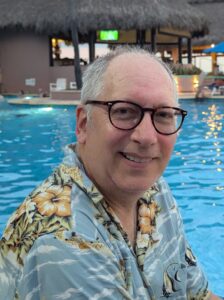 David Clements is a weed ecologist based at Trinity Western University in Langley, BC, Canada. His research on integrated weed management, invasive riparian plants, Garry oak ecosystems and climate change has yielded more than 100 scientific publications. He manages TWU’s field research sites: the Ecosystem Study Area, the Blaauw Eco Forest and the Crow’s Nest Ecological Research Area on Salt Spring Island. As well as teaching ecological courses on the TWU campus, he teaches field courses on the BC Coast and Hawaii. In 2022 he published two edited books, Persistence Strategies of Weeds and Global Plant Invasions. He is one of the editors of the Biology of Invasive Plants series in Invasive Plant Science and Management which he helped to developed in 2020. He also edits a series on invasive species for Pacific Science which he helped initiate in 2007 and was the editor for over 16 years. He is a founding board member of the Christian environmental stewardship group A Rocha Canada, as part of A Rocha International which works in over 20 countries. He is actively involved in several local environmental stewardship groups such as the Fraser Valley Invasive Species Society and the Salmon River Enhancement Society and writes a monthly column called the Green Beat for the Langley Advance Times newspaper.
A Horizon Scan watchlist of freshwater & marine non-indigenous species in the maritime provinces of Canada.
Thursday, March 5th @12:00pm EST
There is a growing in-flux of non-indigenous species (NIS) brought to new locations via anthropogenic pathways, some of which are harmful to ecosystems, economies, and social and cultural health of receiving environments. In order to protect native ecosystems from invasion by novel NIS, watchlists of potentially problematic species are required. To date in Canada, the Great Lakes are the only jurisdiction to have generated a freshwater NIS watchlist.
In this Webinar, Sarah Kingsbury, Fisheries and Oceans Canada, will highlight the findings of a large-scale horizon scan of both freshwater and marine NIS in the Maritime provinces. Through this research, her team compiled a list of thousands of potential invaders and identified the most high-risk species to the region.
Meet the Speaker: Sarah Kingsbury, Senior Aquatic Invasive Species Biologist for Fisheries and Oceans Canada
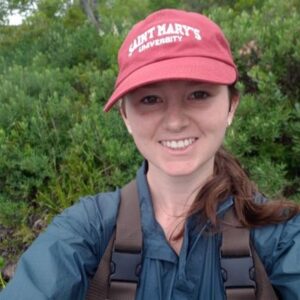 Sarah is the Senior Aquatic Invasive Species Biologist for Fisheries and Oceans Canada working in Nova Scotia. She specializes in freshwater non-indigenous species but also has many projects in marine ecosystems. She likes working with data and is familiar with ecosystem-based and species habitat suitability modelling. Sarah also works with eDNA and genomics, screening-level risk assessments, climate matching, and framework development. Mainly, she likes to work on projects that contribute to aquatic invasive species management. Previously, Sarah completed her MSc thesis at Saint Mary’s University in Halifax, NS, studying the Chinese mystery snail (Cipangopaludina chinensis). Her BSc in chemistry was completed at the Royal Military College in Kingston, ON.
Indigenous Guardians: Indigenous leadership in stewardship
Wednesday, March 18th @12:00pm EST
Canada’s Indigenous Guardians programs are transforming how land and water stewardship is practiced across the country. This webinar will highlight how Indigenous Nations are leading conservation, invasive species management and protection of biodiversity.
Dena Kayeh Institute:
Tanya Ball (Dahkadle) is a proud member of both the Kaska and Tahltan First Nations. Her deep connection to the land, and her commitment to learning from Elders about culture, language, and traditional knowledge, have shaped her academic journey and guided a career focused on advancing the Indigenous Guardians movement and Indigenous Protected and Conserved Areas (IPCAs). Tanya’s post-secondary education includes certifications in Earth and Environmental Studies, Applied Environmental Techniques, Environmental Site Assessment Assistant Training, Advanced GIS, and completion of the Boreal Guardian Program at Dechinta University.
Tanya currently works with the Dena Kayeh Institute, where she serves as Guardian Coordinator for the Dane Nan Yḗ Dāh Kaska Land Guardian Program. Tanya also works with SIKU as a First Nations Coordinator and with the Northern Indigenous Stewardship Circle as a guardian coordinator. Also a In addition, Tanya works with the 3 Nations (Tahltan, Kaska, Taku River Tlingit) Society as the 3 Nations Land Guardian Coordinator.
Garden River First Nation:
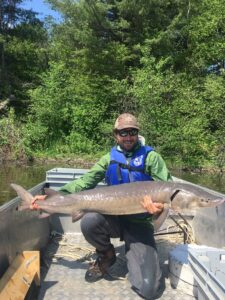
Aaron Jones, Garden River First Nations
“Sea Lamprey Management in Garden River First Nation: A Brief History of Cultural Impacts & A Path Towards Environmental Reconciliation”
Kainai Nation (the Blood Tribe):
For generations, the Blackfoot people used fire as a land stewardship tool to maintain prairie ecosystems and support native plants and wildlife. Today, on Kainai territory in Southern Alberta, the Blood Tribe is leading efforts to bring ‘Good Fire’ back to the landscape. Their work, as Canada’s first Fire Guardian Program, is rekindling traditional knowledge to restore the land.
Alvin First Rider, Environmental Manager for the Blood Tribe Land Management, will share insights from the Kainai Nation’s Fire Guardians program and how they are reintroducing cultural burning practices to improve grassland health and reduce invasive plant fuel loads.
Spotted Lanternfly: Biology, cold tolerance & leveraging alternative sources of species occurrences for biodiversity and conservation research
Tuesday, March 24th @12:00pm EST
This Webinar will feature 2 presentations on the Spotted Lanternfly.
“Biology and cold tolerance of spotted lanternfly”
The spotted lanternfly (Lycorma delicatula, Hemiptera: Fulgoridae) is a planthopper native to China and southeastern Asia and is invasive in North America. To inform the risk assessment of northward spread into Canada, Anna will discuss results from her work determining the cold tolerance strategy and lower lethal limits of overwintering eggs.
“Leveraging alternative sources of species occurrences for biodiversity and conservation research – a case study in the spotted lanternfly”
Effective monitoring of invasive species population size and established distribution is crucial for control and eradication efforts, but physical survey efforts can be costly and resource-intensive. Here, we explore the capacity of Google Trends, a tool quantifying internet searches made on the Google search engine, to contribute to monitoring of population abundance and established distribution of the spotted lanternfly (Lycorma delicatula), a recent invasive insect to North America that has resulted in a number of negative ecological and agricultural effects. Specifically, we aimed to assess whether Google Trends reflects changes in population size and established geographic range. Alex will discuss its efficacy in monitoring the spotted lanternfly invasion in particular as well as possible considerations and limitations of this approach generally.
Meet the Speakers: Anna Turbelin, Research Scientist, Natural Resources Canada
Anna Turbelin is a Research Scientist at the Great Lakes Forestry Centre, Natural Resources Canada, in Sault Ste. Marie. Her research focuses on invasion science, particularly the cold tolerance of invasive insects such as the spotted lanternfly (Lycorma delicatula) and the cascading effects and synergies between biological invasions and natural hazards. She holds a PhD in Physical Geography from King’s College London and previously conducted postdoctoral research at Université Paris-Saclay on projects pertaining to invasion science including InvaCost and AlienScenarios.
Alex Van Huynh, Assistant Professor of Biology, DeSales University
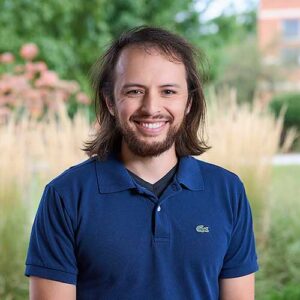 Dr. Alex Van Huynh received his Ph.D. from Lehigh University in 2020. He is currently an Assistant Professor of Biology at DeSales University. His research employs multiple approaches for answering fundamental questions in ecology, evolution, and conservation.