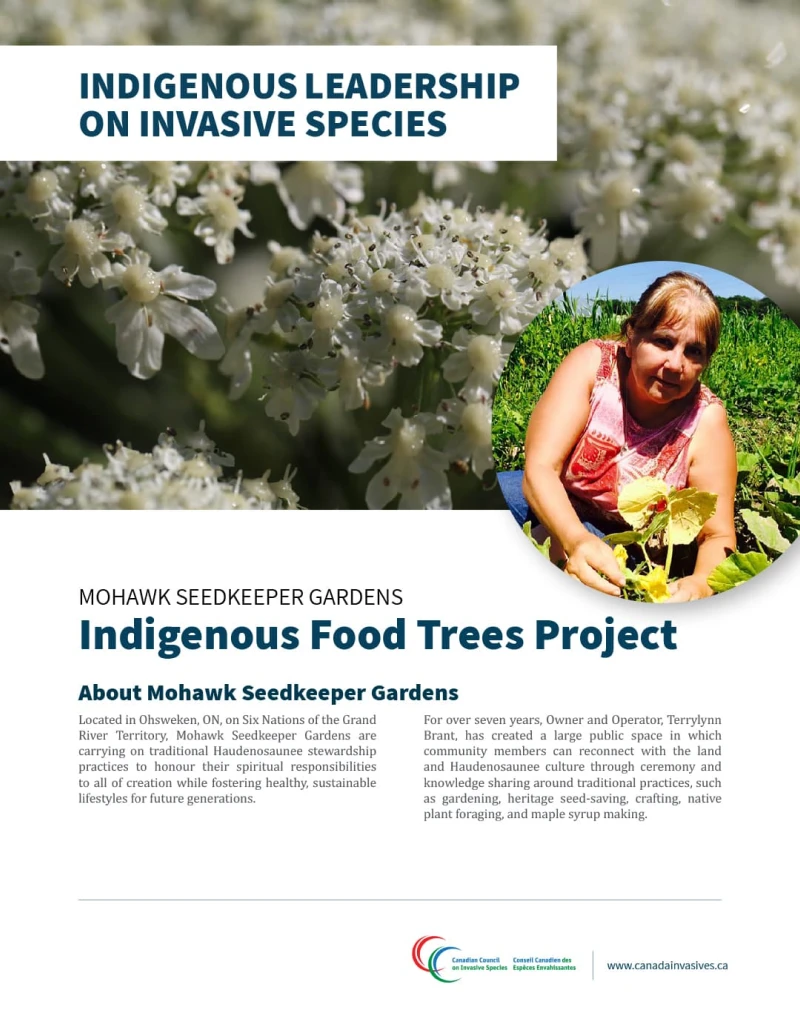
About Mohawk Seedkeeper Gardens
Located in Ohsweken, Ontario, on Six Nations of the Grand River Territory, Mohawk Seedkeeper Gardens uphold traditional Haudenosaunee stewardship practices to honor their spiritual responsibilities to all of creation while fostering healthy, sustainable lifestyles for future generations.
For over seven years, Owner and Operator Terrylynn Brant has created a large public space where community members can reconnect with the land and Haudenosaunee culture through ceremony and knowledge sharing. These activities focus on traditional practices such as:
Impacts of Invasive Species on Traditional Practices
The Haudenosaunee people have long relied on native Carolinian plant species for agriculture and foraging, maintaining respectful relationships with the land for their prosperity and well-being. However, the introduction of non-Carolinian species has disrupted these relationships and threatened the traditional practices that depend on them.
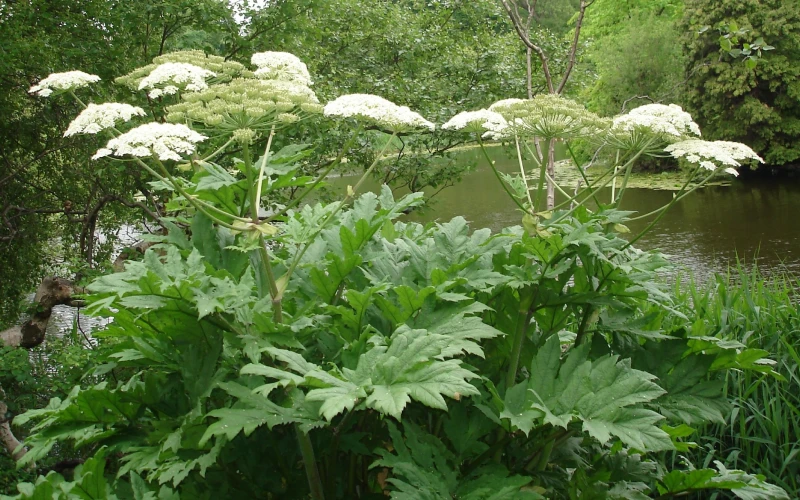
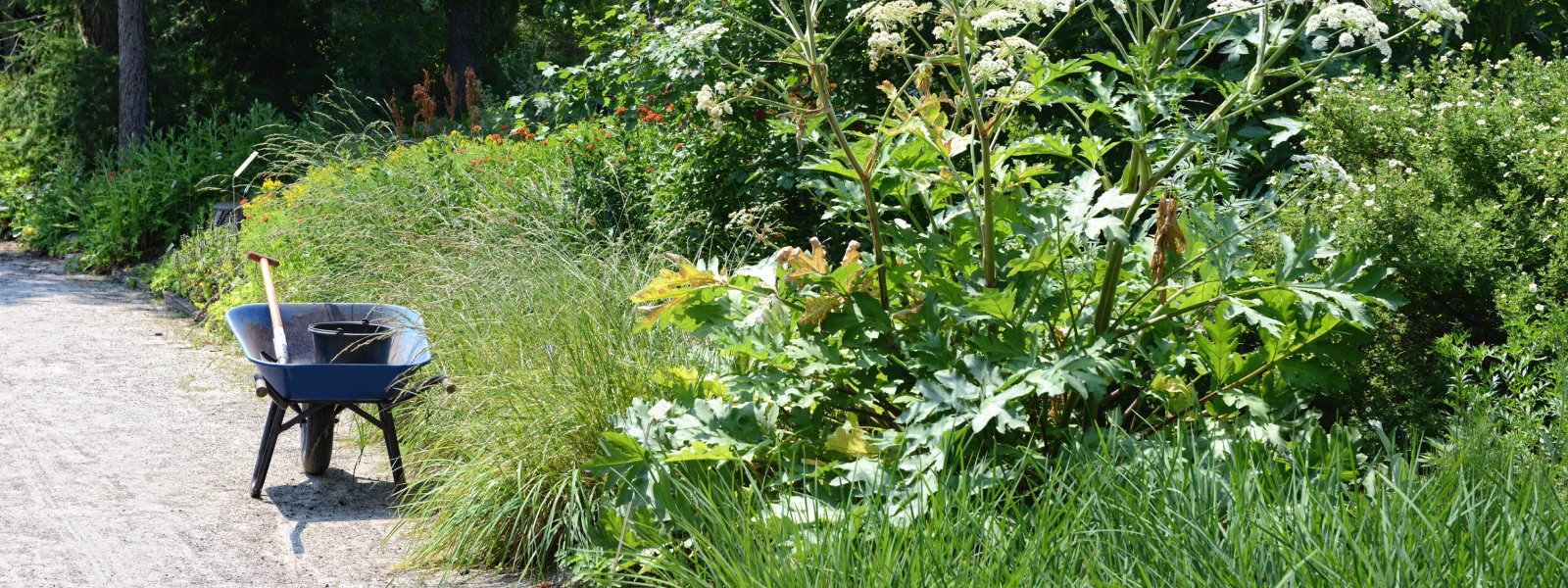
Giant Hogweed (Heracleum mantegazzianum)
Locally known as parsnip, giant hogweed has rapidly expanded in recent years.
Its aggressive growth threatens the ability of Haudenosaunee gardeners to cultivate traditional agricultural plant species.
It also poses a health risk, causing skin irritation for those working the land.
While some removal efforts are underway, mixed land-use across the region makes coordinated management difficult, leaving individual gardeners struggling to control the spread.
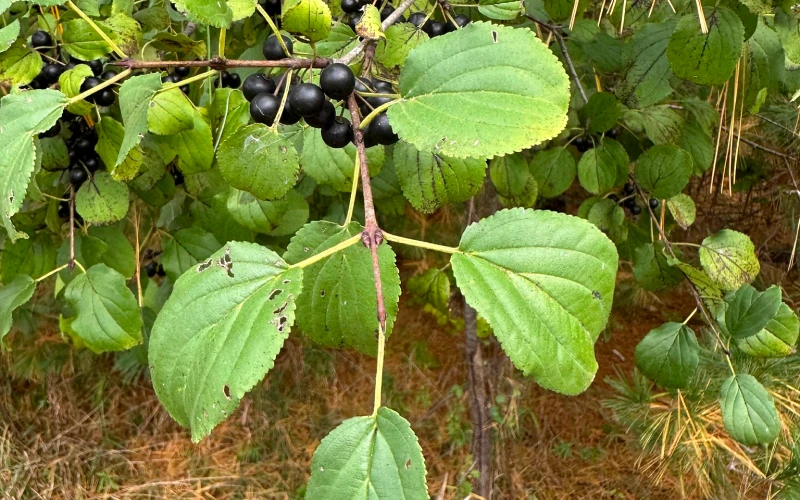
Common Buckthorn (Rhamnus cathartica)
Introduced to southern Ontario over a century ago, common buckthorn has invaded Carolinian ecosystems, negatively impacting native plant species and traditional Haudenosaunee foraging practices.
Culturally important foraging species impacted by common buckthorn include:

© aceofboas via iNaturalist.org, used under CC BY NC.

© George Cook via iNaturalist.org, used under CC BY NC.

© oksanaetal via iNaturalist.org, used under CC BY
Community Efforts to Combat Invasive Species Impacts
Led by Terrylynn Brant and Mohawk Seedkeeper Gardens, the newly launched Indigenous Food Trees Project is working to revitalize Haudenosaunee land management by:
By building on existing land-based capacity-building activities, the Indigenous Food Trees Project provides an opportunity for community members to gain knowledge and skills while taking collective action through hands-on land management.
Through these efforts, both Haudenosaunee foragers and native Carolinian plant species will have a stronger chance to thrive.
“Plants that don’t treat people well.”
— Terrylynn Brant
Indigenous Leadership on Invasive Species
On behalf of the Canadian Council on Invasive Species (CCIS), Advocate Strategies collaborated with Indigenous communities and organizations to develop a series of spotlights on Indigenous-led invasive species initiatives. These case studies aim to inspire future projects and promote collaborative action in addressing invasive species challenges.
Learn More About Mohawk Seedkeeper Gardens