
Create a Three-Season Pollinator Garden based on your Province
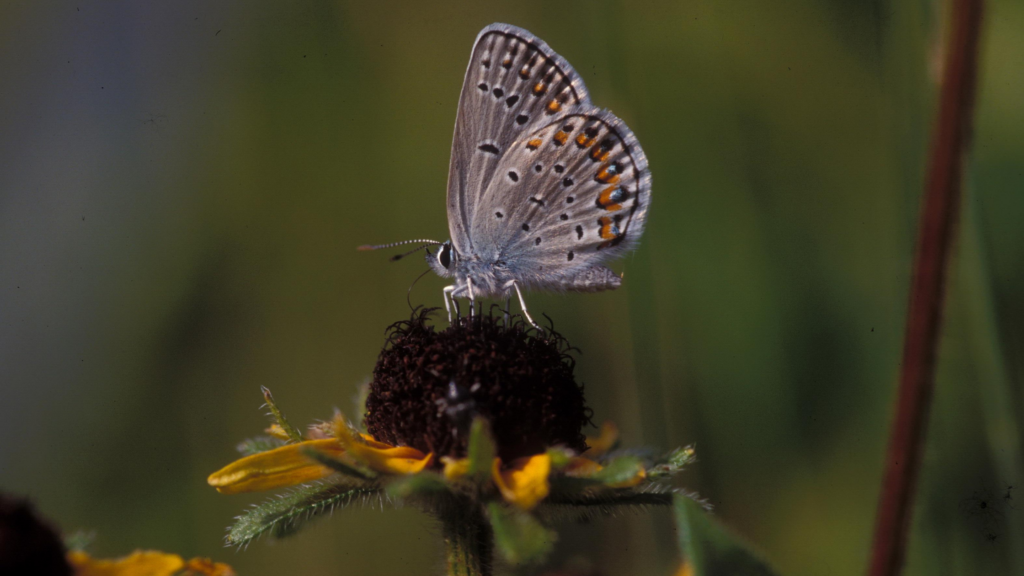
Image source: Catherine Herms, The Ohio State University, Bugwood.org
Pollinator gardens are amazing for supporting your local pollinators! They help support local ecosystems and ensure that native pollinators have food and shelter. On top of that, pollinators need our help more than ever! A study conducted in 2025 found that over one-fifth of native pollinators in North America are at risk of extinction. Keep reading to discover how you can help pollinators in your community with your own three-season pollinator garden.
Why use the 3x3x3 system for your Pollinator Garden?
Pollinator gardens are wonderful, but what if there was a way to make them even more impactful? Well, the 3x3x3 system does just that! This system allows pollinators to enjoy native plants across the three growing seasons (spring, summer, and fall). In this method, gardeners pick 3 different native pollinator plants to bloom for each of the 3 growing seasons, planting 3 plants of each species. In total, you will have 27 native plants. For a full guide to the 3x3x3 system, check out this resource found here.
Create Your Pollinator Garden
To start, it’s always important to do research on the plant species you put into your garden. Selecting plants native to your region helps ensure local pollinators receive the right food and the habitat they need. Based on your garden location, when selecting plants, you want to ensure they receive the correct amount of sunlight. For the placement of the plants, you will need to factor in a few things, such as bloom timing, plant height, and how you would like the flower colours arranged. Placement is all based on preference, some gardeners like to have the tallest plant near the back and the smallest near the front for a more aesthetic look and better sun exposure.
When creating your garden, it is important to adopt the PlantWise principles to help support biodiversity. Such as choosing non-invasive or native plants for your garden, checking your plant purchases against regional invasive species lists and more!
To make things easy, we have created examples of pollinator gardens using the 3x3x3 system based on your province! Scroll down to discover your next garden arrangement.
British Columbia
Spring
- Western Trillium (Trillium Ovatum)
- Red Flowering Currant (Ribes Sanguineum)
- Large-leaved Lupine (Lupinus Polyphyllus)
Summer
- Common Snowberry (Symphoricarpos Albus)
- Nodding Onion (Allium Cernuum)
- Common Woolly Sunflower (Eriophyllum Lanatum)
Autumn
- Elegant Goldenrod (Solidago Lepida)
- Pacific Aster (Symphyotrichum Chilense)
- Pearly Everlasting (Anaphalis margaritacea)
Explore the Invasive Species Council of British Columbia’s Grow Me Instead resources.
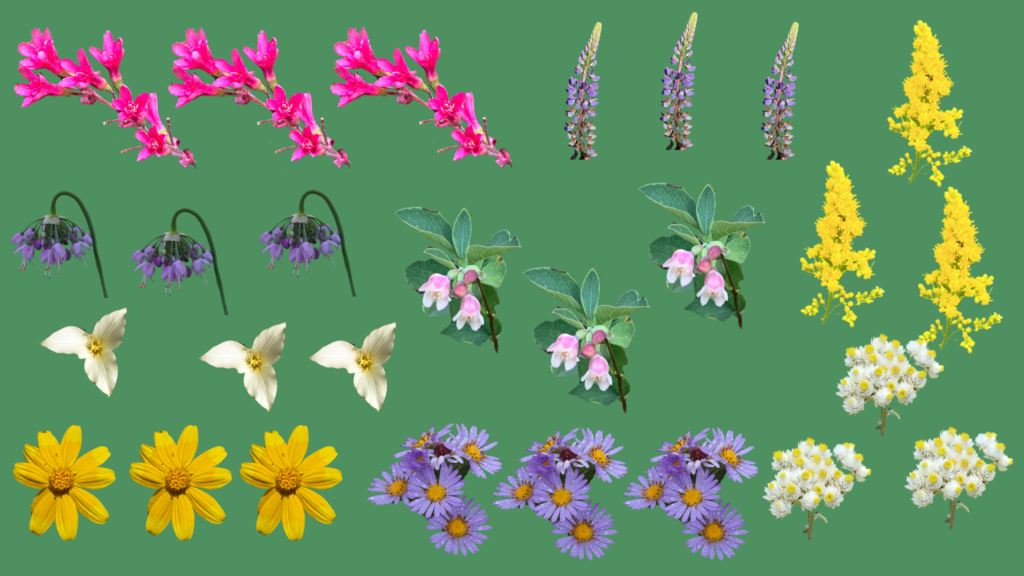
Image source: Red Flowering Currant: © Barry Saxifrage inaturalist.org, Large-leaved Lupine © nerdignome inaturalist.org, Elegant Goldenrod: © August Caddel, Nodding Onion: © R Munzer inaturalist.org, Common Snowberry: © Joan Septembre, inaturalist.org, Common Wooly Sunflower: © Pamela Bond, inaturalist.org, Pacific Aster: © Michael G. Shepard, inaturalist.org, Pearly Everlasting: © Miranda Lakes, inaturalist.org
Alberta
Spring
- Prairie Crocus (Pulsatilla Patens)
- Golden Bean (Thermopsis Rhombifolia)
- Virginia Strawberry (Fragaria Virginiana)
Summer
- Yellow Beardtongue (Penstemon Confertus)
- Wild (Lewis) Blue Flax (Linum Lewisii)
- Beebalm / Wild Bergamot (Monarda Fistulosa)
Fall
- Prairie Sage (Artemisia Ludoviciana)
- Missouri (Prairie) Goldenrod (Solidago Missouriensis)
- Great Blanketflower (Gaillardia aristata)
Discover more with the Alberta Invasive Species Council Be PlantWise Grow Me Instead program resources.
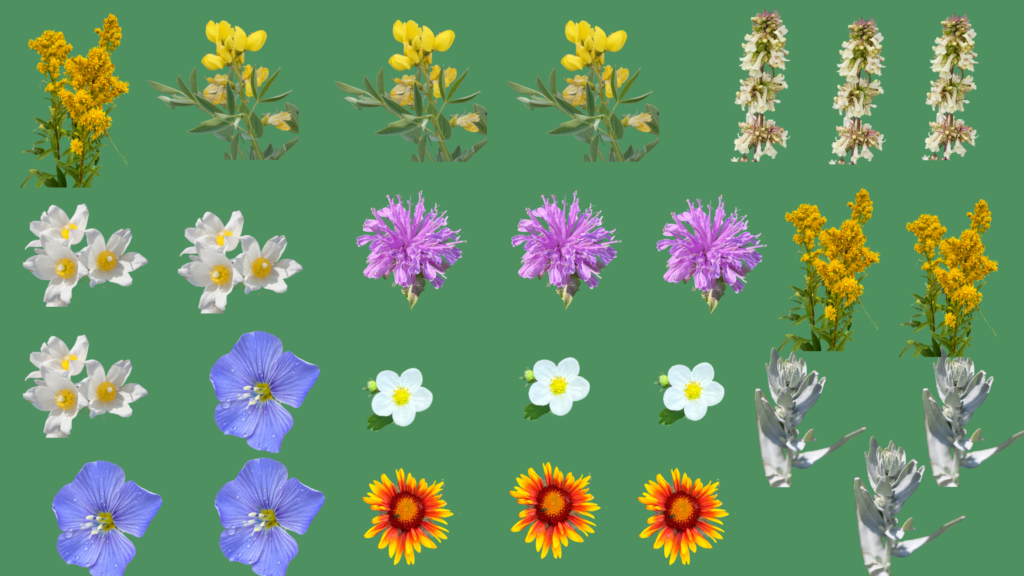
Image sources: Golden Bean: © Norbert Kondla, inaturalist.org, Yellow Beardtongue: © jesseniabd, inaturalist.org, Beebalm/Wild Bergamot: © zesty ranch, inaturalist.org, Missouri (prairie) Goldenrod:© maddyarmande, Wild Blue Flax: © Caleb Catto, inaturalist.org, Virginia Strawberry: © rvonseggern, inaturalist.org, Great Blanketflower: © emcho, inaturalist.org, Prairie Sage: © Rowan Fehr, inaturalist.org
Saskatchewan
Spring
- Saskatoon Berry (Amelanchier Alnifolia)
- Prairie Pasqueflower (Pulsatilla Patens)
- Prairie Smoke (Geum triflorum)
Summer
- Prairie Onion (Allium Textile)
- Wild Bergamot (Monarda Fistulosa)
- Meadow Blazing Star (Liatris ligulistylis)
Fall
- Prairie Goldenrod (Solidago Missouriensis)
- Smooth Aster (Symphyotrichum Laeve)
- Tufted Fleabane (Erigeron Caespitosus)
Explore Saskatchewan Invasive Species Council Invasive Species Fact Sheet
Manitoba
Spring
- Golden Alexander (Zizia Aurea)
- Prairie Crocus (Pulsatilla Patens)
- Prairie Rose (Rosa Arkansana)
Summer
- Purple Prairie Clover (Dalea Purpurea)
- Dwarf Milkweed (Asclepias Ovalifolia)
- Canadian Milkvetch (Astragalus Canadensis)
Fall
- Tall Coneflower (Ratibida Pinnata)
- Big Bluestem (Andropogon Gerardii)
- Maximilian (Narrow-Leaved) Sunflower (Helianthus Maximiliani)
Explore the Invasive Species Council of Manitoba Grown Me Instead brochure for more native plants.
Ontario
Spring
- Red Columbine (Aquilegia Canadensis)
- Wild Geranium (Geranium Maculatum)
- Canada Anemone (Anemone Canadensis)
Summer
- Common Milkweed (Asclepias Syriaca)
- Wild Bergamot (Monarda Fistulosa)
- Black-eyed Susan (Rudbeckia Hirta)
Fall
- Canada Goldenrod (Solidago Canadensis)
- England Aster (Symphyotrichum Novae-angliae)
- Spotted Joe-Pye Weed (Eutrochium Maculatum)
Explore the Ontario Invasive Plant Council Grow Me Instead Resources for your pollinator garden.
Quebec
Spring
- Golden Alexanders (Zizia Aurea)
- Labrador Tea (Rhododendron Groenlandicum)
- Bloodroot (Sanguinaria Canadensis)
Summer
- Culver’s Root (Veronicastrum Virginicum)
- Swamp Milkweed (Asclepias Incarnata)
- Pearly Everlasting (Anaphalis Margaritacea)
Fall
- Boneset (Eupatorium Perfoliatum)
- Common Sneezeweed (Helenium Autumnale)
- New England Aster (Symphyotrichum Novae-angliae)
New Brunswick
Spring
- Large False Solomon’s Seal (Maianthemum Racemosum)
- Bloodroot (Sanguinaria Canadensis)
- Marsh Blue Violet (Viola cucullata)
Summer
- White Turtlehead (Chelone glabra)
- Black-eyed Susan (Rudbeckia hirta)
- Pearly Everlasting (Anaphalis margaritacea)
Fall
- Common Blue Wood Aster (Symphyotrichum cordifolium)
- Field Goldenrod (Solidago nemoralis)
- Spotted Joe-Pye Weed (Eutrochium maculatum)
Explore more with New Brunswick Species Council PlantWise resources
Nova Scotia
Spring
- Carolina Rose (Rosa carolina)
- Strict Blue-eyed Grass (Sisyrinchium montanum)
- Bearberry (Arctostaphylos uva-ursi)
Summer
- Northern Blue Flag (Iris versicolor)
- Blue Vervain (Verbena hastata)
- Swamp Milkweed (Asclepias incarnata)
Fall
- Zigzag Goldenrod (Solidago flexicaulis)
- Pearly Everlasting (Anaphalis margaritacea)
- Large-leaved Aster (Eurybia macrophylla)
Explore the Nova Scotia Invasive Species Council PlantWise and Grow Me Instead resources.
PEI
Spring
- Common Cinquefoil (Potentilla simplex)
- Canada Anemone (Anemone canadensis)
- Strict Blue-eyed Grass (Sisyrinchium montanum)
Summer
- Northern Blue Flag (Iris versicolor)
- Swamp Milkweed (Asclepias incarnata)
- Cutleaf Coneflower (Rudbeckia laciniata)
Fall
- Calico Aster (Symphyotrichum Lateriflorum)
- Northern Seaside Goldenrod (Solidago Sempervirens)
- Spotted Joe-Pye Weed (Eutrochium Maculatum)
Discover the PEI Invasive Species Council resources.
We hope this blog helps you create your very own three-season pollinator garden! If you’re looking for more ways you can make a difference to help support local wildlife, then check out our Take Action Programs. In these programs, you will learn how to support your local community through simple actions that help stop the spread of invasive species.