
Conservation Canines Helping to Stop the Spread of Invasive Species
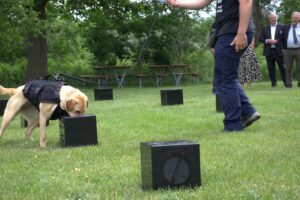
You’ve probably heard the term “working dogs” before. You might think of police dogs aiding officers with scent detection, or therapy dogs providing support, but there’s another kind of working dog helping to protect wildlife and natural places we love. Conservation canines use their remarkable sense of smell to support invasive species prevention, detection, and management. Keep reading to meet some of the dogs working across Canada and discover how their unique abilities are strengthening on-the-ground invasive species efforts.
What are Conservation Canines?
These dogs are often trained for detection in three main conservation focus areas: endangered species, disease, and invasive species. Like any other working dog, these canines go through specialized training. For invasive species, these dogs put their noses to the test through scent detection training, where they learn to use their powerful sense of smell to find targeted scents.
Dogs are able to smell anywhere from 1000 to 10,000 times better than humans, helping them discover invasive species in areas our eyes may not detect. This remarkable sense of smell can help find species or signs of them in hidden or hard-to-reach places. Some detection dogs can also learn many distinct target scents, allowing them to monitor for a range of species.
These dogs can help at every stage, from early detection to mapping new invasive species infestations. Early detection of invasive species, while populations are still small, can create more opportunities to respond before they become established or spread further. Conservation canines are one of many tools used alongside monitoring, surveys, public reporting and other surveillance approaches to find and track invasive species. These amazing pups also help raise awareness about invasive species and inspire people to learn more.
Tails of Conservation Canines
Meet Credit Valley Conservation’s Canine Detector: Tilly
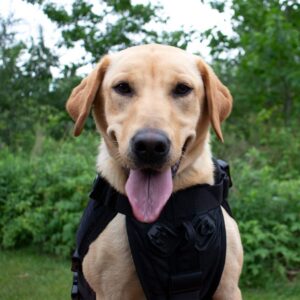
Image Source: Credit Valley Conservation
Credit Valley Conservation, in partnership with Credit Valley Conservation Foundation, has launched Ontario’s first Conservation Detection Dog program during June 2026. The program aims to support early detection of high-risk invasive species to prevent them from becoming established. The dog spearheading the program is Tilly!
Tilly is specially trained to detect invasive species odour before more visible signs appear. She has been trained to detect spotted lanternfly, hemlock woolly adelgid and red swamp crayfish. A typical day for Tilly and her handler begins with checking the weather and site conditions, coordinating with relevant partners and heading out to the survey location, with the searches taking anywhere from an hour to a full day. Tilly helps Credit Valley Conservation staff search larger and more challenging areas efficiently and can detect target species that might otherwise be difficult to find using traditional monitoring methods alone. The program represents an important shift from reactive management to a more proactive, prevention-focused approach.
One of Tilly’s most exciting successes so far has been her ability to distinguish between native and non-native crayfish burrows with great accuracy. This level of precision is incredibly encouraging. It demonstrates the potential of conservation detection dogs to support scientists and conservation professionals in monitoring invasive species in priority areas. Learn more about Tilly and the impact she’s making here.
“The Conservation Detection Dog Program is an exciting example of how innovation can strengthen the way we protect the Credit River Watershed. Tilly’s remarkable ability to detect invasive species before they become visible gives our teams a valuable tool for early detection and prevention,” said Terri Hamilton, Chief Administrative Office at CVC. “Through the partnership between CVC and CVCF, we’re proud to continue exploring new ways to care for the natural spaces our communities value.”
Meet the Alberta Conservation K9 Unit
Alberta’s Conservation K-9 Unit, which started in 2015, is currently made up of three detection dogs that support the province’s Aquatic Invasive Species program. These detection dogs inspect watercraft entering Alberta to ensure they are not transporting invasive mussels to new, uninvaded waterbodies. During watercraft inspections, Inspectors visually inspect boats for signs of invasive mussels while the dogs use scent to investigate areas that may be difficult to see or reach. Working together, the human Inspectors and dog bring different detection abilities to the inspection and can provide another layer of surveillance aimed at preventing invasive mussels from reaching new waterbodies.
This amazing team of dogs helps monitor and prevent invasive species by conducting routine checks of shorelines and water infrastructure, including docks and boat launches, at lakes across the province. These conservation canines don’t just detect aquatic invasives species, some are trained to detect evidence of invasive wild pigs through scat and carcass and much more.
All three dogs received training by Working Dogs for Conservation (WD4C). WD4C helps train and deploy conservation dogs internationally. These dogs are often rescued, rehomed, and career change dogs (dogs that did not thrive in their previous working dog role). To select dogs for invasive species detection, they need a strong play drive and a strong focus on their target. About 1 in 1000 dogs have this unique trait, which makes scent detection work perfectly for them and, most importantly, makes it a lot of fun for them too!
Let’s meet Hilo, Jane and Winnie, the active conservation canines helping to stop invasive species in Alberta!
Meet Hilo
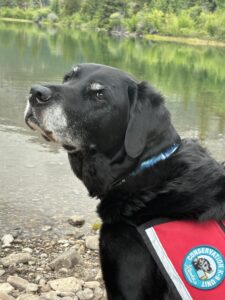
Hilo has been on the Albert’s Conservation K-9 crew the longest, trained to detect zebra, quagga, golden mussels, wild boar, and thesium and bats (for mortality surveys). A memorable moment for Hilo was his first deployment to search for invasive wild pig scat in northern Alberta. Although the terrain was difficult and accompanied by many insects, Hilo was able to detect boar scat in only 30 minutes. Talk about an impressive nose.
“The possibilities are endless when it comes to detection work,” Cindy Sawchuck, Aquatic Invasive Species Operations and K9 Program Lead of Alberta’s Conservation K-9 unit.
Meet Jane
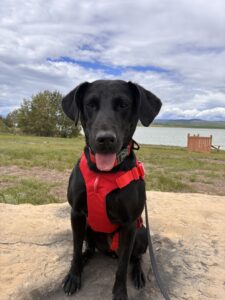
Jane recently joined the crew and is named after Jane Goodall! Jane is trained to detect zebra, quagga, and golden mussels, and has recently started to learn to detect wild boar. As a new member of the team, Jane is still learning the ropes. She participates in discovering invasive mussels during boat inspections that are often hard to detect.
Meet Winnie
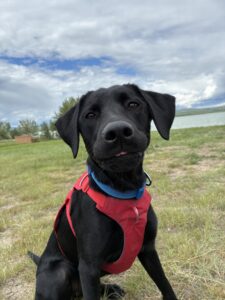
Winnie is a new member of the K9 team, named after Lake Winnipeg! Winnie’s name is a nod to the amazing work done by the Aquatic Invasive Species crew with the Government of Manitoba to contain invasive mussel populations. Just like the other team members, Winnie can detect zebra, quagga, and golden mussels, and has recently started to learn to detect wild boar. Like the rest of the team, Winnie’s day-to-day often changes depending on the work required that day. Winnie gets a nice stretch before embarking on any journey to make sure he is ready for a fun day of work!
Although conservation detection dogs are a relatively new tool in invasive species work, their remarkable sense of smell opens new possibilities for monitoring and detection. By detecting target scents in hard-to-see or hard-to-reach areas on boats, across difficult terrain, or where species and signs can be challenging to distinguish visually, conservation canines can complement human expertise, technology and other monitoring tools. Tilly, Hilo, Jane, and Winnie demonstrate how their special skills can help us strengthen early detection, prevention and monitoring efforts in Canada to not only curb the spread of invasive species, but protect the places we love.
If you feel inspired to make a difference like these amazing canines, check out our Take Action Programs to join nature stewards across Canada in taking simple actions to prevent the spread of invasive species in your community.
Who We Are
Invasives Canada works nationally to connect practitioners and organizations, share knowledge and effective approaches, and help build Canada’s capacity to prevent and manage invasive species.