
Purple Loosestrife
Description
Purple loosestrife (Lythrum salicaria) is an invasive perennial plant native to Europe and Asia that was introduced to North America in the 1800s. Known for its showy spikes of purple flowers, it invades wetlands and other moist habitats where it can form dense stands that crowd out native vegetation and reduce suitable food, shelter, and nesting habitat for wildlife. Purple loosestrife is a prolific seed producer, with large plants capable of producing millions of seeds each year, allowing it to spread rapidly into disturbed areas.
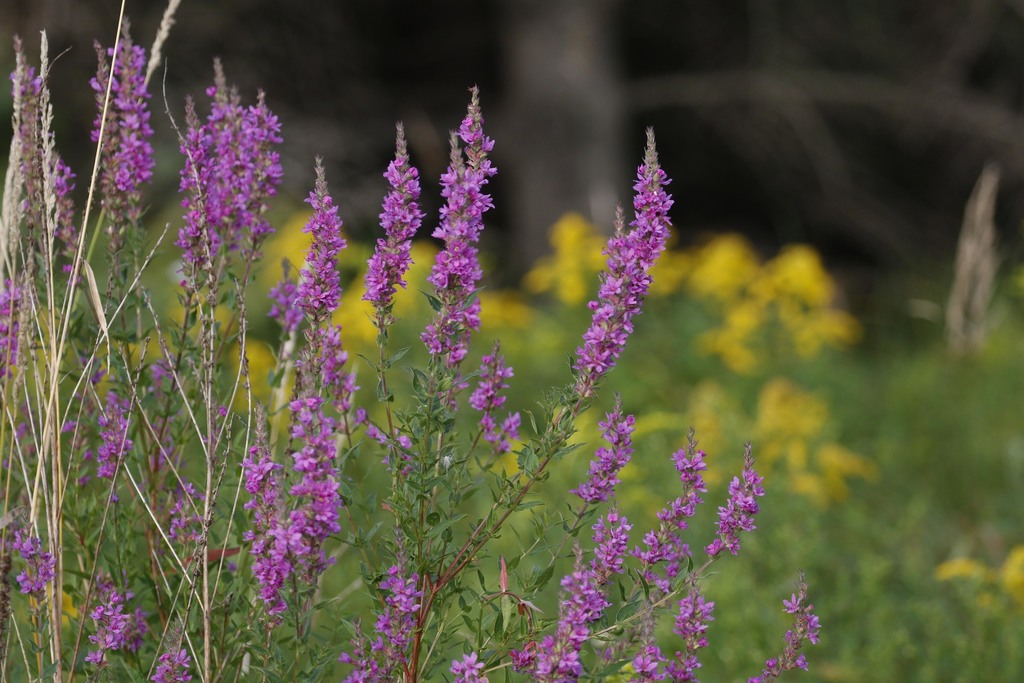
© Donna Pomeroy via iNaturalist.org, used under CC-BY-NC
Introduction and Spread
Purple loosestrife is native to Europe and Asia. It was brought to North America in the 1800s through several pathways including in ship ballast, imported livestock, sheep fleece and as ornamental plant for gardens and bee keeping. It can spread through natural pathways (i.e, wind, water, birds or other wildlife) or human-made pathways (i.e, in seed mixes, contaminated soil and equipment, clothing or footwear or intentional planting in gardens). Where it was once intentionally planted in gardens, it escaped into natural areas. Disturbance created by road maintenance or construction can encourage the germination of purple loosestrife seeds. In addition, improper cleaning of equipment and transportation vehicles can also carry plants to new areas.
Purple loosestrife occurs in all US states with the exception of Florida. In Canada, purple loosestrife is found in all provinces except for the Yukon, Northwest Territories and Nunavut.
Habitat
Purple loosestrife can colonize a variety of habitats. However, it prefers recently disturbed areas with exposed soil and abundant light. Once established, plants can thrive in a wide range of soil pH, soil types and climatic conditions.
Identification
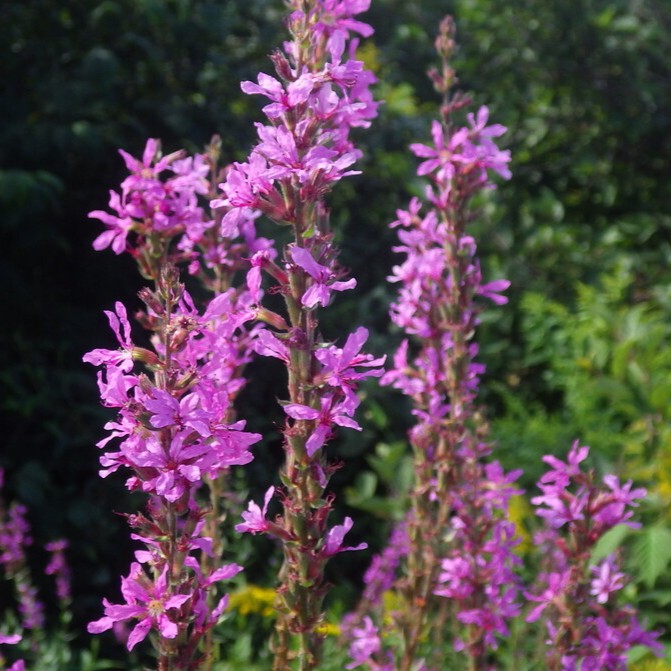
Purple loosestrife
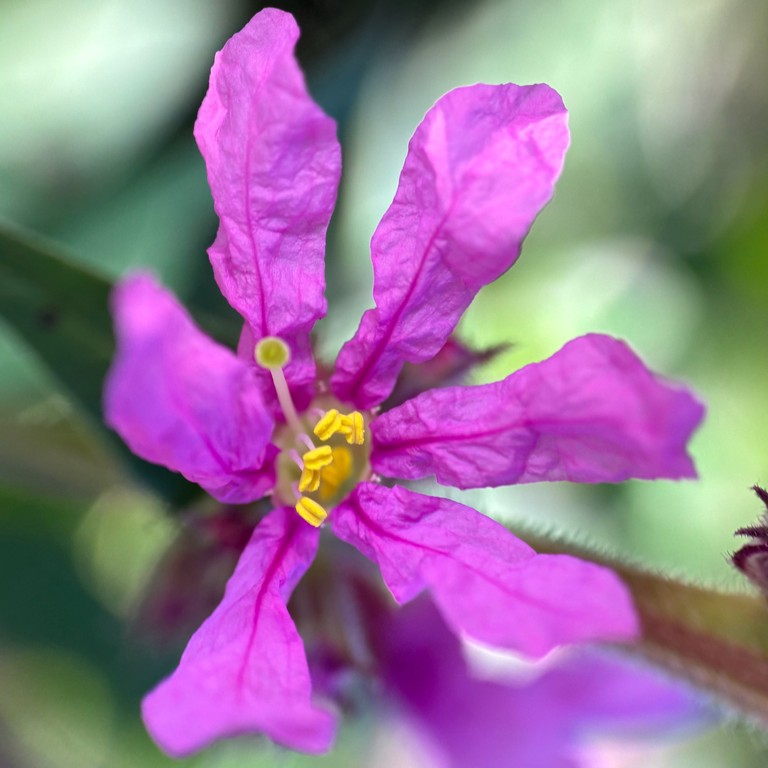
Purple loosestrife flower
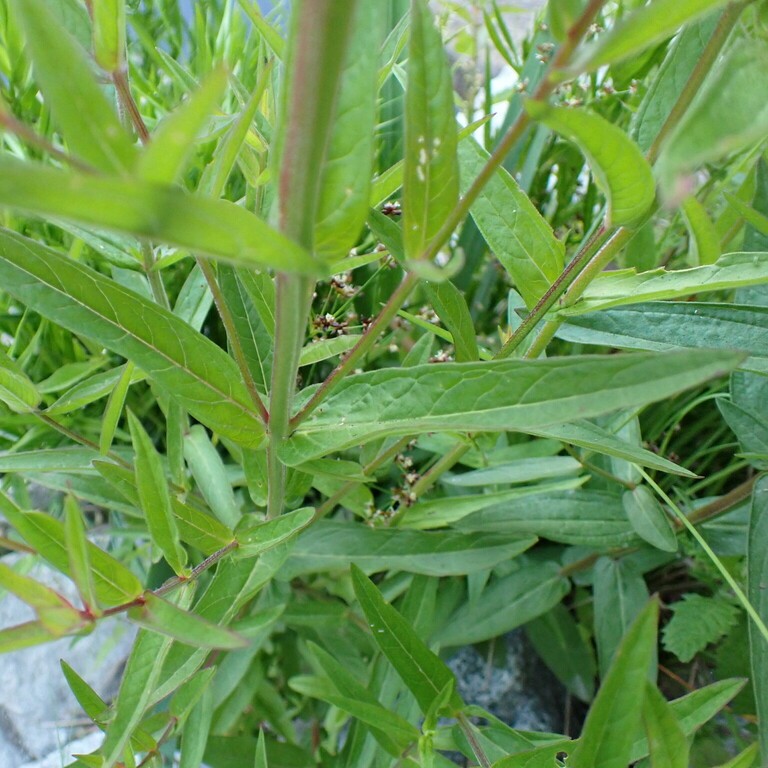
Purple loosestrife leaves
Impacts
Life cycle
Purple loosestrife is a perennial herbaceous plant that regenerates from a persistent taproot and root stock. Reproduction occurs primarily through seeds which can remain dormant for several years. Germination takes place in the late spring and early summer in open, sunny areas once the soil temperature reaches between 15 – 20 °C. Purple loosestrife is one of the fastest growing wetland plants and is able to grow over 1 m tall in its first year. It flowers in late June and produced seed pods in early August (McCaughey and Stephenson 2000). One plant can have 900 – 100 capsules each with 83 – 100 seeds. In the fall, the aboveground parts of the plant will dieback (Mai et al. 1992).
What You Can Do
You can help prevent the spread of purple loosestrife by:
Other Resources
- Mai, T. K. et al. 1992. The Biology of Canadian Weeds. 100. Lythrum salicaria. Canadian Journal of Plant Science 72(4): 1305-1330.
- McCaughey, T. L. and G. R. Stephenson. 2000. Time from Flowering to Seed Viability in Purple Loosestrife (Lythrum salicaria). Aquatic Botany 66: 57-68.
- Tavernia, B. G. and J. M. Reed. 2012. The Impact of Exotic Purple Loosestrife (Lythrum salicaria) on Wetland Bird Abundances. The American Midland Naturalist 168 (2): 352-363.
- Wilson, L. M. et al. 2004. Biology and Biological Control of Purple Loosestrife, Technology Transfer/Forest Health Technology Enterprise Team. Morgantown, West Virginia: Forest Health Technology Enterprise Team, U.S. Dept. of Agriculture, Forest Service.