
Dog-Strangling Vine
Description
Dog-strangling vine (Vincetoxicum rossicum) is an invasive perennial vine native to eastern Europe that was introduced to North America as an ornamental plant in the late 1800s. It grows rapidly in a variety of habitats, forming dense mats that can outcompete native vegetation and alter wildlife habitat. Dog-strangling vine spreads readily by wind-dispersed seeds and root fragments, making established populations difficult to control.
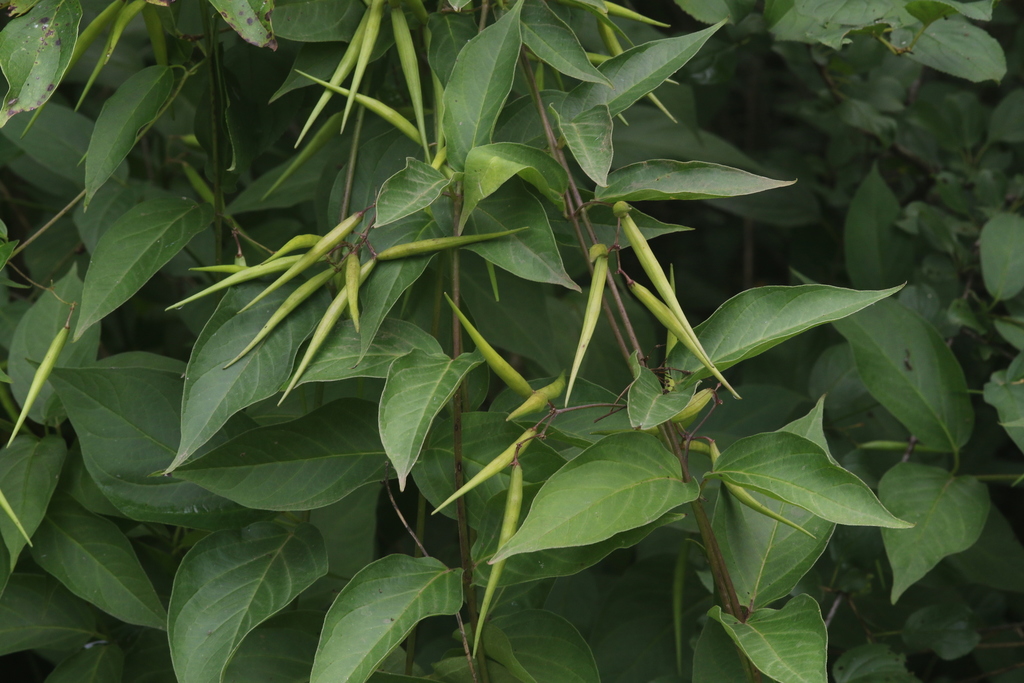
© Don Sutherland via iNaturalist.org, used under CC-BY-NC
Introduction and Spread
Dog-strangling vine is native to eastern Europe and was introduced to North America as an ornamental plant in the late 1800s. It was first recorded in Canada (Toronto, Ontario) in 1899. Dog-strangling vine can spread via seeds and root fragments. It produces a substantial number of seeds. The seeds of dog strangling vine have a tuft of hair (coma) that aids in wind dispersal. Dense populations of dog-strangling vine can produce 30,000 seeds/m2 (Smith 2006) with some plants producing over 100 seed pods (Smith et al. 2006). Seeds have high viability and germination rates, allowing this plant to form a substantial seed bank.
Habitat
Dog-strangling vine can grow in a variety of habitats such as woodland edges, ravines, fence lines, roadsides, prairies, and in forests. It can survive across a wide range of disturbed and urban landscapes (Averill et al. 2010). It prefers open sunny areas but can tolerate light shade. Dog-strangling vine generally has reduced success and reproductive potential in forests, it can invade closed-canopy forests and dominate the understory, particularly where there are gaps in the canopy (Westbrook et al. 2023).
Identification
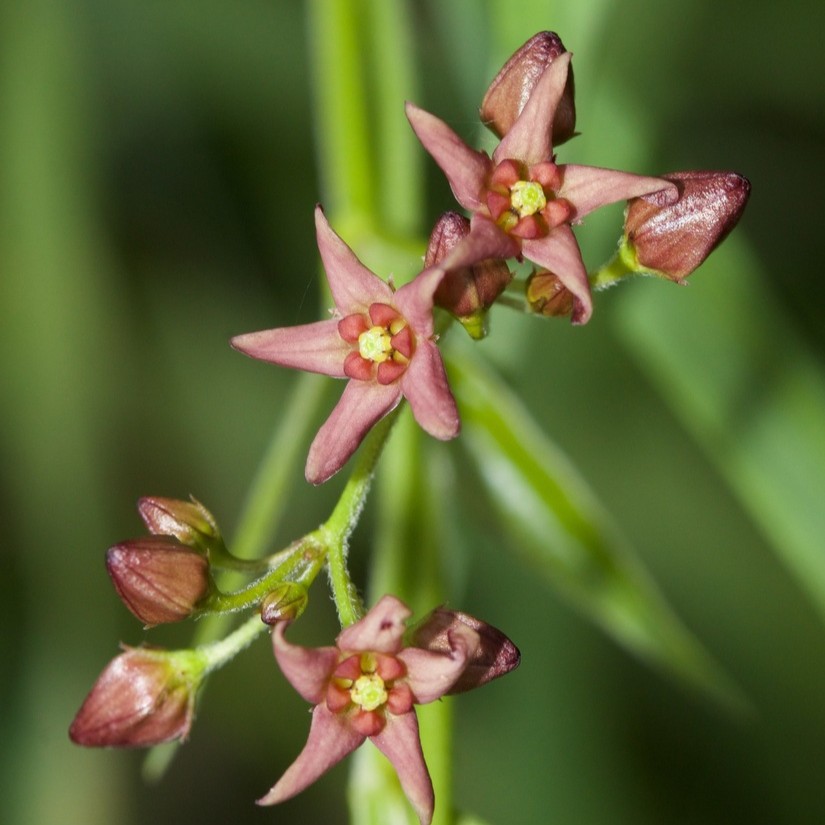
Dog-strangling vine flower
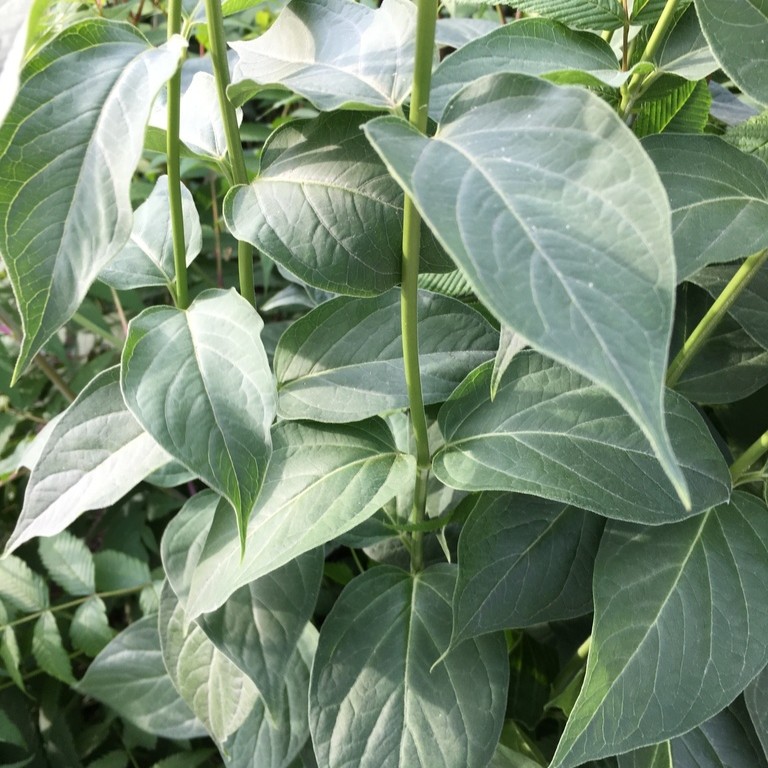
Dog-strangling vine leaves
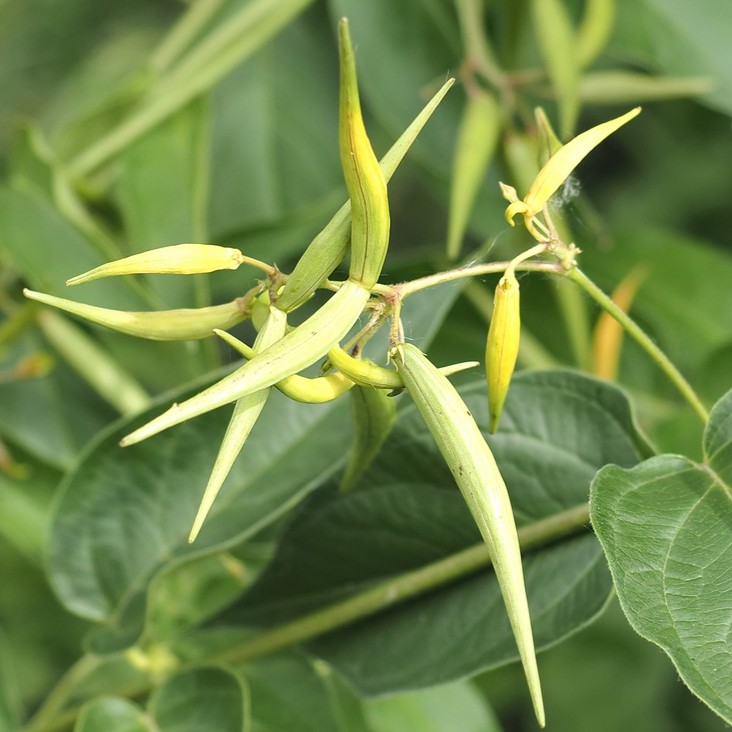
Dog-strangling vine fruit
Impacts
What You Can Do
You can help prevent the spread of Dog-strangling vine by:
Other Resources
- Averill K, DiTomasso A, Mohler C and Milbrath L. 2010. Establishment of the invasive perennial Vincetoxicum rossicum across a disturbance gradient in New York State, USA. 211: 65 – 77.
- Biazzo J and Milbrath L. 2019. Response of pale swallowwort (Vincetoxicum rossicum) to multiple years of mowing. Invasive Plant Science and Management. 12(3): 169 – 175.
- Bugiel L, Livingstone S, Isaac M, Fulthorpe R and Martin A. 2018. Impacts of invasive plant species on soil biodiversity: a case study of dog-strangling vine (Vincetoxicum rossicum) in a Canadian National Park. Canadian Journal of Botany. 98(4): 716 – 723.
- COSEWIC. 2016. COSEWIC assessment and status report on the Monarch Danaus plexippus in Canada. Committee on the Status of Endangered Wildlife in Canada. Ottawa. xiii + 59 pp. Available from: https://www.canada.ca/en/environment-climate-change/services/species-risk-public-registry/cosewic-assessments-status-reports/monarch-2016.html.
- DiTomasso A, Stokes C, Cordeau S, Milbrath L and Whitlow T. 2018. Seed-dispersal ability of the invasive perennial vines Vincetoxicum nigrum and Vincetoxicum rossicum. Invasive Plant Science and Management. 11(1): 10 – 19.
- McKague C and Cappuccino N. 2005. Response of pale swallow-wort, Vincetoxicum rossicum, following aboveground tissue loss: Implications for the timing of mechanical control. The Canadian Field Naturalist. 119(4): 525 – 531.
- Smith L, DiTomasso A and Greipsson S. 2006. Growth and reproductive potential of the invasive exotic vine Vincetoxicum rossicum in northern New York State. Canadian Journal of Botany. 84(12): 1771 – 1780.
- Westbrook A, Millbrath L, Weinberg J and DiTommaso A. 2023. Biology of Invasive Plants 3. Vincetoxicum nigrum (L.) Moench and Vincetoxicum rossicum (Kleopow) Barbarich. Invasive Plant Science and Management. 16(1): 3 – 26.