
Communicating on Invasive Species
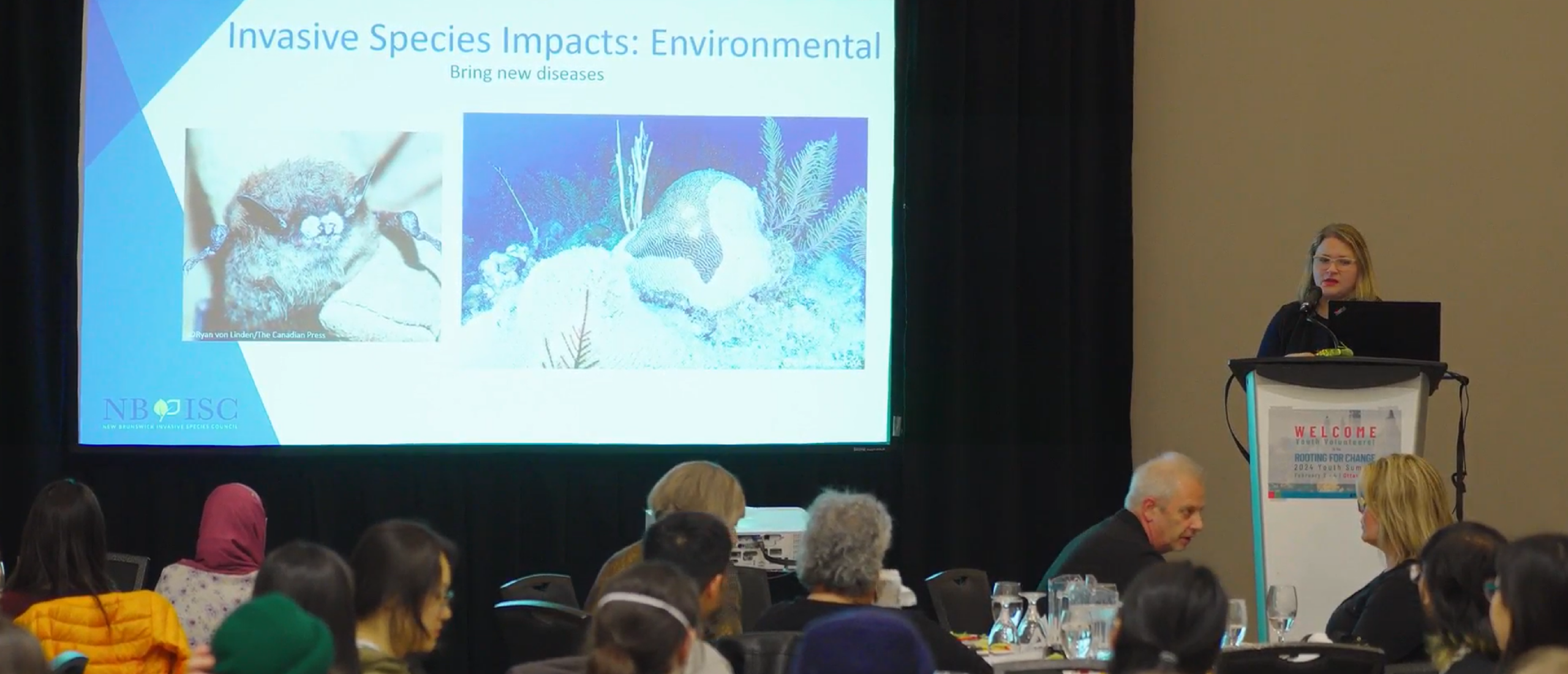 New Brunswick Invasive Species Council presenting at a conference about the impacts of invasive species.
Rethinking How We Talk About Invasive Species
Scientists work hard to make sense of the natural world. But sometimes, there’s a disconnect between science and those it’s meant to inform. Complicated topics and complex technical terms can make research sound like a completely new language. Science communication is essential for boiling down often confusing, jargon-filled, scientific research and topics into easily understood concepts. In a way, environmental outreach and education organizations act as ‘interpreters’ for researchers.
Creating awareness on topics like climate change, invasive species, biodiversity loss, and how these things impact our day-to-day lives, is an important component to changing behaviour. It’s not enough to just talk about these issues – the language we choose to use can make or break the success of those communications. The names we give species, the metaphors we rely on, the terms we use, and the way we frame ecological processes, all influence public perception, engagement, and even the success of management efforts. As invasive species professionals, communicators, and educators, it’s up to us to use language that is accurate, effective, and inclusive.
What’s in a Name?
What do we mean by saying the language we use can impact how people view invasive species and effectiveness of management? Here’s an example to highlight the point.
That weedy-looking plant below is our great Canada Thistle – the proud National thistle of our country. I’m kidding, it’s not our national thistle, in fact, Canada thistle is an invasive spiny thistle native to Europe, Western Asia, and Northern Africa. So why do we call it Canada thistle then? Well, that goes all the way back to the first settlers when American settlers blamed it’s introduction on French traders in Canada.
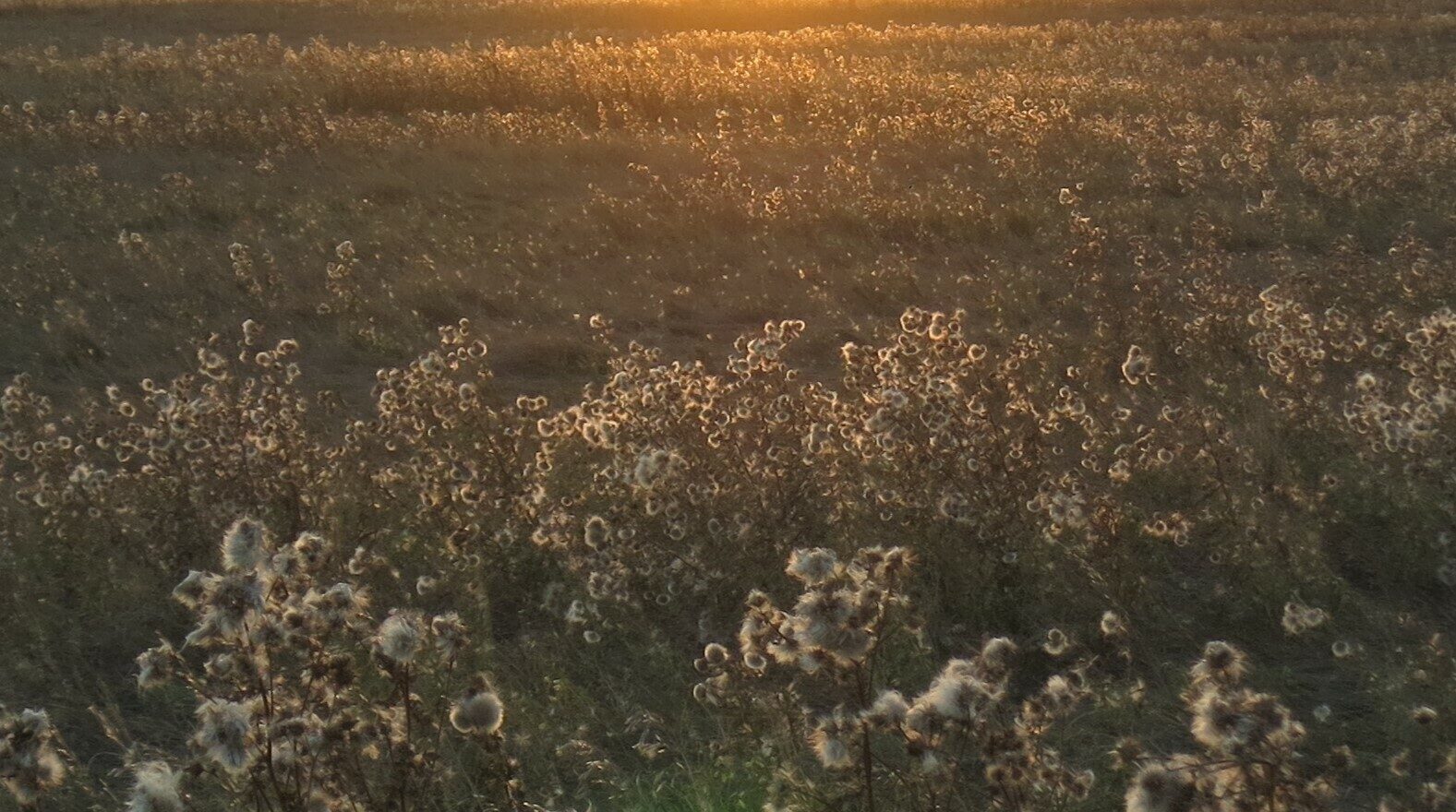
A field of invasive creeping thistle (Cirsium arvense). Photo: iNaturalist, © forest-stream-and-sea
The point is, your average Joe learning about the “Canada thistle” might assume (and rightly so) that this weed is native, and therefore good for the environment. That assumption might lead to plantings of Canada thistle and even backlash towards removal of the invasive weed. You can also see how this can impact funding of Canada thistle-related management projects.
If you take away anything from this blog it’s to call Canada thistle by it’s other common name “Creeping thistle”. If there’s any name that screams “I’m bad” it’s Creeping thistle. Using better, non nativist common names, like Creeping thistle, can help reduce confusion and support management efforts.
Beyond Confusion: When Names Reinforce Bias
The above example shows one of the challenges with place-based species names. They can be misleading, inaccurate, and sometimes socially loaded. Geographic identifiers are actually quite common in invasive species names. Think Japanese knotweed, European buckthorn or Asian carp. These names may lead to unintended consequences for outreach and can even invoke divisions along nationality or ethnicity.
The Entomology Society of America says:
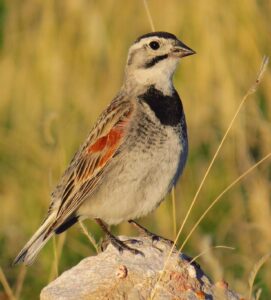
Picture of a thick-billed longspur (Rhynchophanes mccownii). Photo: iNaturalist, © bocrees
“These names perpetuate harm against people of various ethnicities and races, create an entomological and cultural environment that is unwelcoming and non-inclusive, disrupt communication and outreach, and counteract the very purpose of common names.”
So, what can we do? Well, some species have already been renamed. Lymantria dispar, previously referred to by the common name “Gypsy moth” is now called Spongy moth due to the derogatory nature of the original common name. Sometimes these name changes just make sense and can even help people more readily identify the species.
Look at the Thick-billed longspur, formerly named McCown’s longspur after a confederate general. This bird’s (left) new common name reflects its distinct large bill, whereas “McCown’s long spur” isn’t very helpful from an identification perspective (what does a McCown even look like?).
Using Better Language
Not every species will be renamed. But it’s equally important for us to avoid the use of militaristic and extreme language when referring to invasive species and their control. Phrases like “winning the fight against invasives”, “defending ecosystems from invaders”, or “on the front lines of invasion” can alienate certain demographics of people. It’s important to remember that these species, although not good for Canada’s ecosystems, aren’t objectively bad, and the only reason they’re here is because of us.
By shifting away from harmful metaphors and toward stewardship-centered language, we can build broader support for invasive species action, and ensure everyone feels welcome in protecting the ecosystems we all share. Here are a few practical steps we all can take towards more inclusive language:
- Use non place-based common names that support identification
- Avoid language that frames invasive species as “enemies” or “invaders”
- Focus messaging on stewardship and conservation
- Be mindful that words carry social and cultural weight
- Inclusive language strengthens participation
- Promote hope and practical action
Want to learn more about this issue? Visit the Entomology Society of America’s “Better Common Names Project”, or learn about the outcomes from the Michigan Sea Grant’s “Invasive Species Language Workshop”.
Further Reading:
- Lower, El, et al. “Recommendations from the Sea Grant-led invasive species language workshop.” Management of Biological Invasions 16.3 (2025): 865-878.
- Larson, Brendon MH. “The war of the roses: demilitarizing invasion biology.” Frontiers in Ecology and the Environment 3.9 (2005): 495-500.
- Cheng, Susan J., et al. “Championing inclusive terminology in ecology and evolution.” Trends in Ecology & Evolution 38.5 (2023): 381-384.
- Shaw, Bret, Tim Campbell, and Barry T. Radler. “Testing emphasis message frames and metaphors on social media to engage boaters to learn about preventing the spread of zebra mussels.” Environmental Management 68.6 (2021): 824-834.