
Tree of Heaven
Description
Tree of Heaven is a deciduous tree native to Asia that was introduced to North America in the late 18th century. Known for its rapid growth and ability to thrive in diverse conditions, it is used in urban areas despite its invasive nature. This species is particularly noteworthy as being the preferred host for the invasive Spotted Lanternfly (Lycorma delicatula).
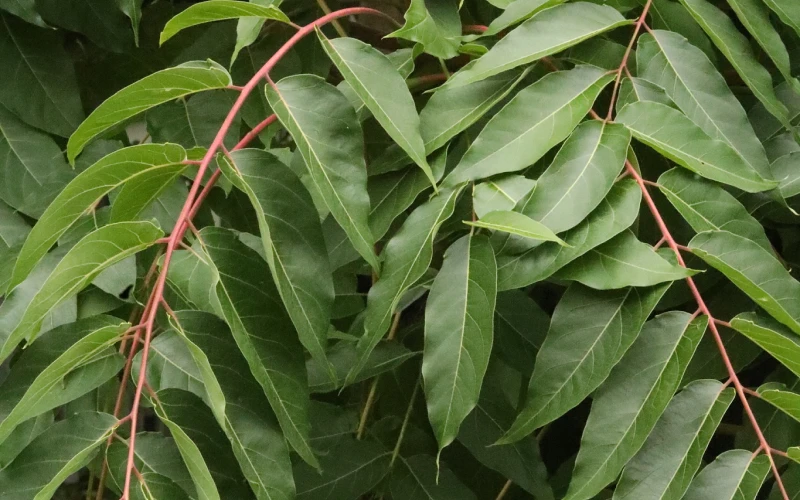
© Sepp Schmid via iNaturalist.org, used under CC BY NC
Introduction and Spread
Originally introduced as an ornamental and street tree, its proliferation is supported by its tolerance to pollution and poor soil conditions. Its spread in North America and Europe was facilitated by its popularity in horticulture and its ability to disperse seeds over considerable distances through wind and water.
Distribution
From its native regions in northeast and central China and Taiwan, Tree of Heaven has become invasive across North America, Western Europe, South Africa, Australia, and New Zealand, thriving particularly in urban settings like parking lots, streets, and abandoned sites.
Habitat
The Tree of Heaven is often found in disturbed urban environments but can also invade natural forested areas and agricultural fields, adapting to a wide range of environmental conditions.
Identifying Features
Biology
Impacts
Ecological
Tree of Heaven dominates sites by forming dense stands that outcompete native vegetation and releasing allelopathic chemicals that inhibit the growth of surrounding plants.
Economic
Its roots can damage urban infrastructure, including buildings, roads, and sewer systems.
Social
The plant’s odorous nature when crushed and its potential to cause allergic reactions in some people pose public health and comfort issues.

What You Can Do
Avoid planting non-native or invasive plant species, like tree of heaven, in your gardens. Our Grow Me Instead guides are great resources for choosing native alternatives for your yard and gardens!
1. Isler, J., Bugmann, H., Conedera, M. et al. Long-term dynamics of tree of heaven (Ailanthus altissima) in central European forests. Eur J Forest Res 142, 1149–1166 (2023). https://doi.org/10.1007/s10342-023-01582-9
2. Bauman, Jenise; Byrne, Caitlin; and Hiremath, Shiv, “Ailanthus altissima (Tree-of-Heaven) Interferes with Beneficial Symbionts with Negative Impacts on Oak Regeneration” (2013). Huxley College on the Peninsulas Publications. 10. https://cedar.wwu.edu/hcop_facpubs/10